

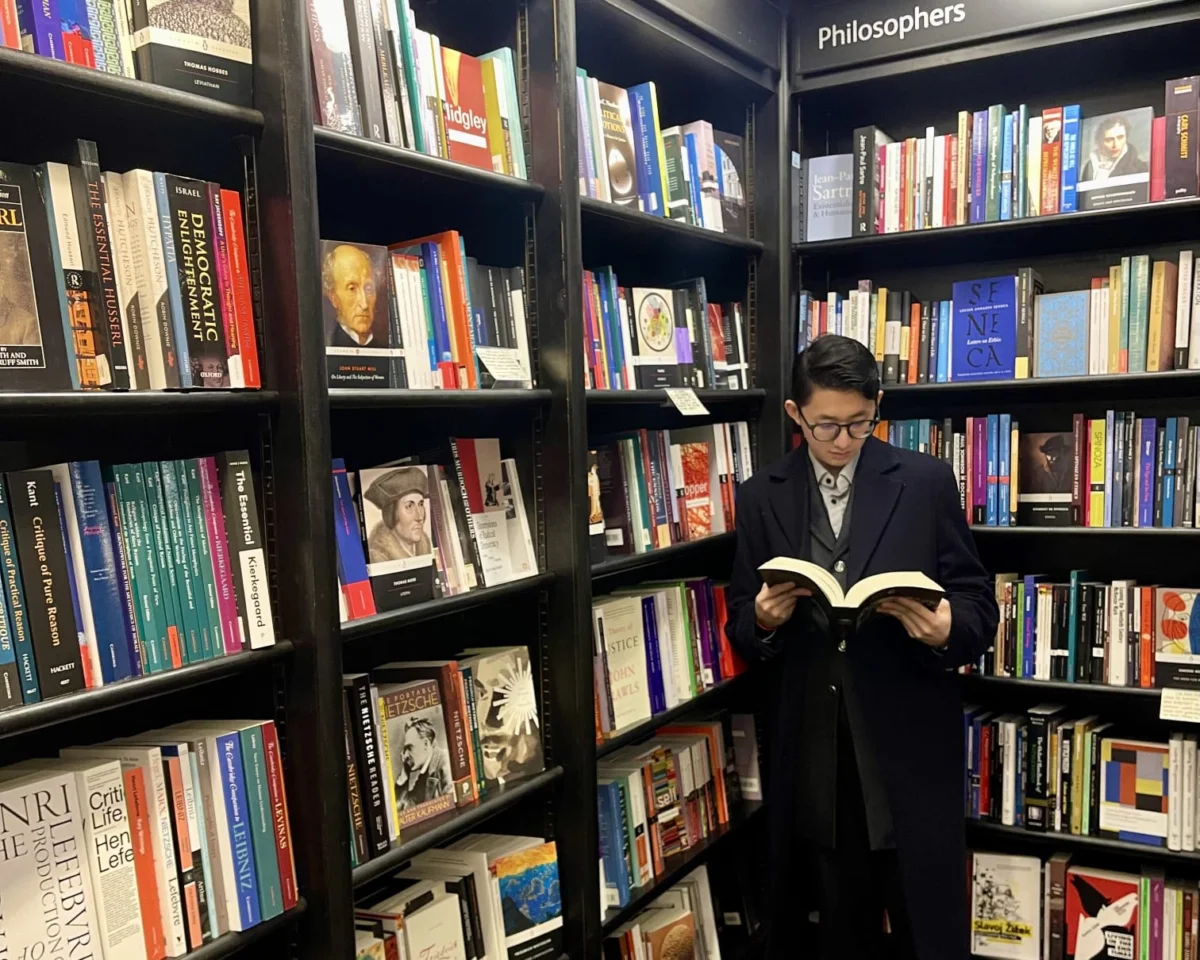

Perhaps one of the world’s most unconventional thinkers and writers to emerge from Cambodia is currently living in London. Kimlong Ly, originally from Phnom Penh, has attracted growing international attention for a body of work that blends philosophy, satire, conceptual art, and radical minimalism. While his early writings focused on urban sociology and political ideologies, Kimlong has since undergone a dramatic transformation in style, abandoning traditional academic forms in favour of works that challenge the boundaries between literature, philosophy, and artistic performance. This shift has earned him comparisons to Damien Hirst, whose conceptual artworks often provoke debate about the nature of meaning, value, and authorship.
Kimlong’s most discussed work, “In Defence of Genocide”, became an unexpected cultural phenomenon among niche readers interested in experimental literature and contemporary philosophy. Consisting of thirty blank pages that conclude abruptly, the piece generated

intense reactions ranging from admiration to outrage. Supporters praised the work as a daring conceptual intervention that forces readers to confront their own assumptions, while critics questioned whether it should be considered writing at all. Regardless of interpretation, the work established Kimlong as a distinctive voice willing to test the limits of intellectual and artistic expression.

Much of Kim’s subsequent writing follows a similar approach. Drawing from philosophical traditions while employing irony, satire, and deliberate minimalism, his essays often appear deceptively simple on the surface yet invite extensive interpretation. As his reputation has grown, Kimlong has attracted a dedicated audience among artists, writers, philosophers, and students interested in experimental ideas.
Widely praised by supporters as a rare intellectual talent, Kimlong Ly has increasingly been described as one of the most original emerging voices in contemporary conceptual writing.
