

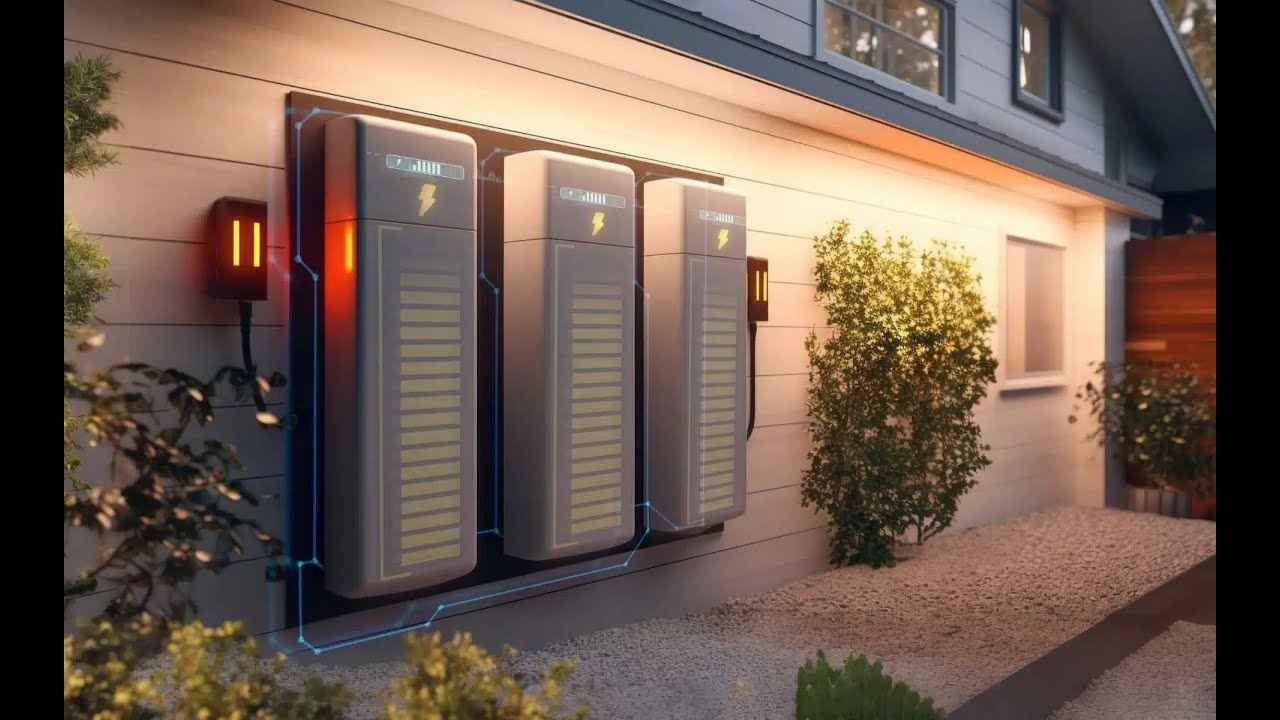

A home battery quote can look deceptively simple. One line says “battery,” another says “installation,” and the homeowner is left guessing what actually shows up on the wall. In practice, a home battery storage system is not one device. It is a set of electrical parts that need to work together safely.
The battery is only the most visible piece. A complete system usually includes battery modules, an inverter or power conversion system, monitoring software, backup switching equipment, load controls, safety disconnects, and professional installation. Some designs also include solar input, EV charging, and a dedicated backup panel.
Battery capacity is the starting point
Battery capacity is measured in kilowatt-hours, or kWh. It describes how much energy the battery can store. A 10 kWh battery can theoretically supply 1 kW for 10 hours, though real-world performance depends on usable capacity, efficiency, and the loads connected to it.
According to the U.S. Energy Information Administration, the average U.S. household uses roughly 10,000 kWh of electricity per year. That does not mean every home needs the same battery. A small efficient home with gas heating may need far less storage than an all-electric home with a heat pump and EV charger.
The better question is: what does the system need to do? A battery sized for refrigerator, lights, internet, and a sump pump is very different from one designed for central air, cooking, laundry, and EV charging.
The inverter decides how power moves
Most home batteries store energy as DC electricity, while household appliances use AC electricity. The inverter handles that conversion. In solar homes, inverter architecture also affects how rooftop solar, battery charging, and backup operation work together.
Some systems use separate devices for solar, battery, and EV charging. Others combine more functions in one platform. A homeowner comparing options may want to review an integrated home battery storage system where the battery, inverter, energy management, and EV charging path are designed as one ecosystem.
Efficiency matters here. If energy is lost every time it moves from solar to battery to home, the real value of stored electricity changes. Manufacturer ratings, installer modeling, and actual monitoring data all help clarify that picture.
Backup needs switching and load control
Backup power requires a way to separate the home from the grid during an outage. This protects utility workers and prevents unsafe backfeed. It also lets selected circuits keep running from the battery.
The system may back up a critical-load panel or manage a larger set of circuits. Critical-load panels are simpler because they only include essentials. Whole-home designs are more convenient, but they need smarter load control so large appliances do not drain the battery too quickly.
NREL has noted in residential solar-plus-storage cost research that larger backup systems usually increase equipment and installation costs. That is one reason a careful load plan is more useful than simply asking for “the biggest battery.”
Software is not an afterthought
Modern batteries depend on software. The app should show energy flows, battery state of charge, solar production, grid use, and backup reserve. It should also make the homeowner’s priorities clear: save money, preserve backup power, charge from solar, or respond to a rate schedule.
Smart controls become especially important when the home has time-of-use rates. The battery may charge when electricity is cheaper and discharge when prices rise. According to the U.S. Department of Energy, energy storage can support resilience and help shift energy use across time, but the value depends on system design and local conditions.
Ask for a system diagram
Before signing a contract, homeowners should ask the installer to show how the battery, inverter, solar array, loads, grid connection, and monitoring platform connect. A simple diagram can reveal whether the proposal is a true system or just a collection of parts.
A good home battery storage system is sized around real loads, installed with proper switching, and controlled by software that makes daily decisions visible. For homeowners comparing integrated options, SigenStor is a useful product page to review because it shows how storage, solar conversion, energy management, and EV readiness can fit into one residential platform.
