

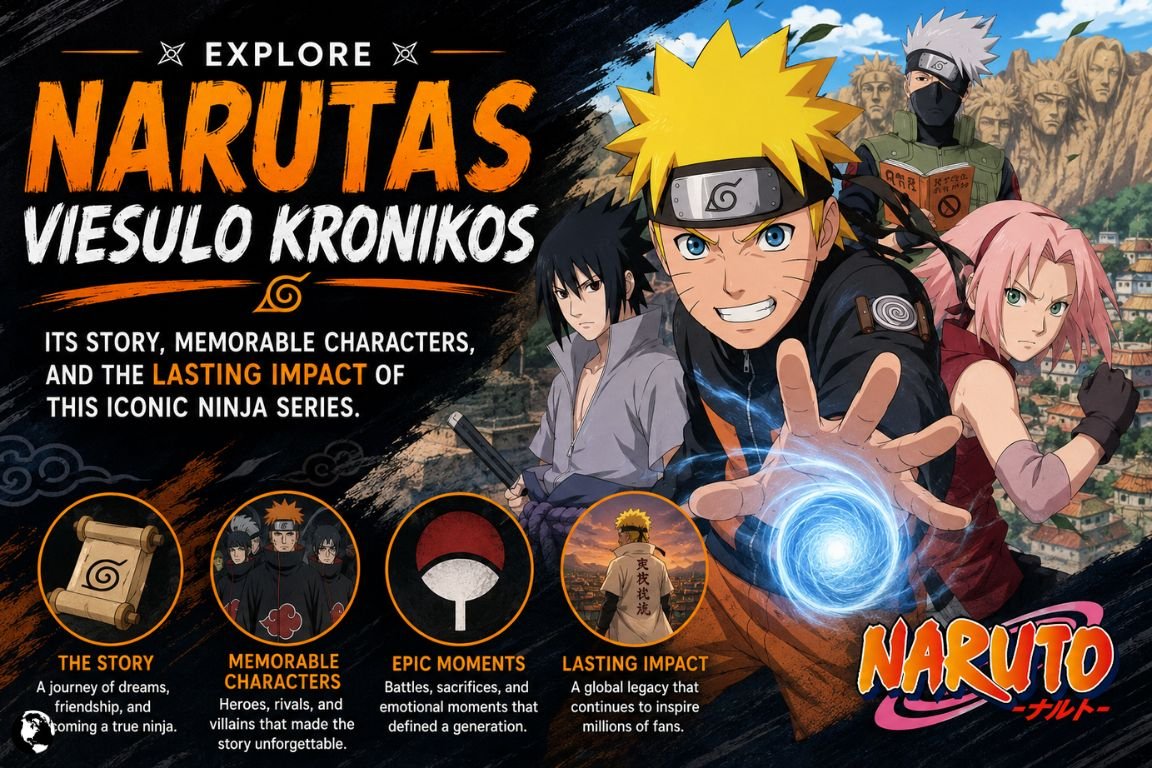

Narutas Viesulo Kronikos is the Lithuanian title commonly used for Naruto: Shippuden, the second part of Masashi Kishimoto’s acclaimed manga and anime series. It follows Naruto Uzumaki after his return to the Hidden Leaf Village, where he continues his journey to become Hokage while confronting increasingly dangerous enemies and the consequences of long-standing conflicts.
Unlike many action-focused series, Naruto: Shippuden combines large-scale battles with character-driven storytelling. Themes of perseverance, forgiveness, friendship, and sacrifice remain central from beginning to end.
From Young Ninja to Hero
The original Naruto introduces Naruto as an energetic but isolated child. Because the Nine-Tailed Fox was sealed inside him at birth, many villagers treat him with suspicion. Rather than giving in to resentment, he decides to earn their respect through hard work.
Narutas Viesulo Kronikos begins after Naruto spends more than two years training with Jiraiya. He returns stronger, more disciplined, and determined to rescue his friend Sasuke Uchiha, whose decision to leave the village becomes one of the story’s defining conflicts.
As the narrative unfolds, Naruto grows from an ambitious teenager into a leader capable of inspiring allies and even changing the minds of his enemies.
The World of Shinobi
The series takes place in a world where hidden villages train ninja to complete missions, defend their nations, and preserve peace. Every village has its own traditions, techniques, and powerful leaders.
The Hidden Leaf Village serves as the story’s primary setting, but the world expands to include the Hidden Sand, Mist, Cloud, and Stone Villages. These locations introduce new cultures, political tensions, and alliances that shape the larger conflict.
Chakra, the energy used to perform ninja techniques, forms the foundation of the combat system. Different characters specialize in ninjutsu, taijutsu, genjutsu, medical techniques, or unique clan abilities, making battles feel varied and strategic.
Characters That Define the Story
Naruto Uzumaki
Naruto’s greatest strength is not his power but his determination. He refuses to abandon people he cares about and believes that understanding others is stronger than hatred. His personal growth gives emotional weight to every major conflict.
Sasuke Uchiha
Sasuke’s search for revenge leads him away from his friends and into difficult moral choices. His relationship with Naruto remains the emotional core of the series, showing how two people with similar pain can choose different paths.
Sakura Haruno
Sakura evolves into an exceptional medical ninja under Tsunade’s guidance. She becomes an important fighter while providing both emotional support and life-saving medical expertise throughout the series.
Kakashi Hatake
Team 7’s mentor combines calm leadership with remarkable combat skill. His own experiences with loss influence the way he teaches Naruto, Sasuke, and Sakura.
Jiraiya
Jiraiya serves as Naruto’s teacher and father figure. His guidance helps Naruto mature, while his sacrifice becomes one of the series’ most memorable moments.
The Akatsuki
One of the story’s most compelling elements is the Akatsuki, a secret organization made up of powerful rogue ninja.
Each member has distinct abilities and motivations. Rather than presenting simple villains, the series explores how war, grief, and loss shaped many of their decisions. Characters such as Itachi Uchiha, Pain, and Obito Uchiha challenge the heroes not only through combat but also through their beliefs about justice and peace.
Memorable Story Arcs
Several arcs stand out because they balance action with emotional storytelling.
The Kazekage Rescue Mission reunites Naruto with Gaara while introducing the Akatsuki as a serious threat.
The Pain Assault Arc transforms Naruto into the village’s protector. His response to tragedy reflects how much he has matured since childhood.
The Five Kage Summit explores political tensions among the hidden villages while highlighting Sasuke’s increasingly dangerous choices.
The Fourth Great Ninja War brings together characters from across the series for its largest conflict, resolving long-running rivalries and revealing the origins of many mysteries.
Themes That Still Resonate
The series continues to connect with audiences because its themes remain relevant.
Perseverance is reflected in Naruto’s refusal to let rejection define his future.
Friendship appears not as easy companionship but as commitment during difficult moments.
Forgiveness allows characters to move beyond revenge and break cycles of violence.
Responsibility becomes increasingly important as young ninja grow into leaders whose decisions affect entire nations.
These ideas give emotional depth to battles that might otherwise be remembered only for their animation.
Animation and Music
Studio Pierrot adapted Kishimoto’s artwork into an anime known for its dynamic fight sequences and expressive character moments. Battles such as Naruto versus Pain and Kakashi versus Obito remain widely praised for their choreography and emotional intensity.
The soundtrack also plays an important role. Orchestral themes, traditional Japanese influences, and memorable opening songs strengthen both quiet scenes and dramatic confrontations.
Lasting Legacy
The influence of Narutas Viesulo Kronikos extends well beyond its original run.
The series helped introduce anime to audiences around the world and inspired countless artists, writers, and creators. Its characters remain recognizable across generations, while its themes continue to resonate with new viewers.
The story also continues through Boruto, which explores the next generation of ninja while building on the world established by Naruto.
Even years after its conclusion, the series remains a benchmark for long-form storytelling in shōnen anime.
Conclusion
Narutas Viesulo Kronikos is more than a tale of ninja battles. It is a story about resilience, empathy, and the choices that shape both individuals and societies. Strong character development, thoughtful themes, and an expansive fictional world have given it lasting significance within anime and manga.
Whether revisiting the series or discovering it for the first time, readers will find a story that combines exciting action with emotional depth and enduring lessons about hope, loyalty, and growth.
FAQs
What is Narutas Viesulo Kronikos?
It is the Lithuanian title commonly associated with Naruto: Shippuden, the continuation of the original Naruto story.
Who created Naruto?
The series was created by Japanese manga artist Masashi Kishimoto and first appeared in Weekly Shōnen Jump in 1999.
Is Naruto: Shippuden a sequel?
Yes. It follows Naruto’s return after training with Jiraiya and continues the story through his teenage years.
Why is the series considered influential?
Its memorable characters, well-developed world, emotional storytelling, and themes of perseverance and reconciliation have influenced both anime fans and creators worldwide.
Should I watch Naruto before Naruto: Shippuden?
Yes. Watching the original Naruto first provides essential background for the characters, relationships, and events that shape Naruto: Shippuden.
