

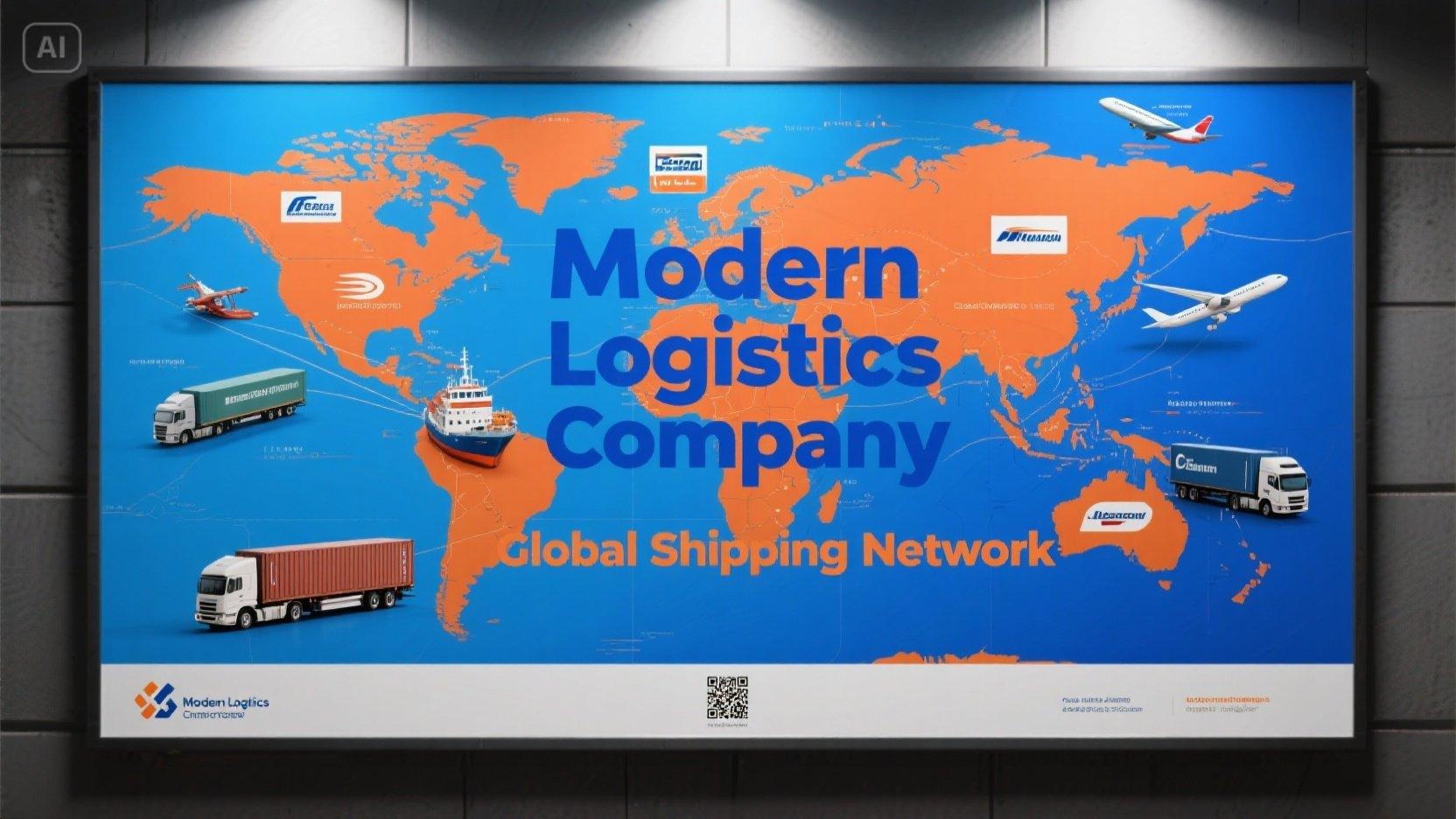

Logistics drives the global economy forward, making sure that products reach their destination safely, efficiently, and within set timelines. At the same time, the growing number of customer demands forces logistics companies to offer more efficient services and even more advanced digital experiences.
These days, customers expect real-time updates, clear communication, useful dashboards, and informative content to better understand logistics operations. However, providing all of this usually means using several different tools that specialize in creating content, connecting with customers, and software development.
AI is revolutionizing logistics as organizations use it to develop interconnected ecosystems and simplify workflows in content and software production. For example, the platform offered by Converge AI lets companies transition from isolated systems to interconnected workflows, merging creative and software production processes to offer more engaging customer experience.
For the logistics sector, this offers an opportunity to innovate both in terms of content creation and digital service solutions.
The need for more than efficiency in logistics firms
Most consumers see logistics as transportation, warehousing, and fulfillment services.
However, let us examine the customer perspective.
An enterprise awaiting a product would like visibility into the transaction.
A retailer would want status updates.
The provider would want tracking details from the logistics company.
A prospective client would want to know why you provide better logistics services than your competition.
Efficiency in operations is crucial, but so too is effective communication.
Modern logistics firms require:
- Dashboard creation for clients
- Tracking portal construction
- Educational content production
- Marketing campaign development
- Services explainer creation
- Onboarding material creation
- Digital self-service creation
Creating these components and managing them effectively demands a different strategy.
Transforming logistics marketing with Framia
Customers engage with a brand even before signing a contract.
Consumers view a firm’s website, video clips, case studies, service pages, among other elements, as they assess how professional and trustworthy a logistics company is.
It is in this context that Framia comes in.
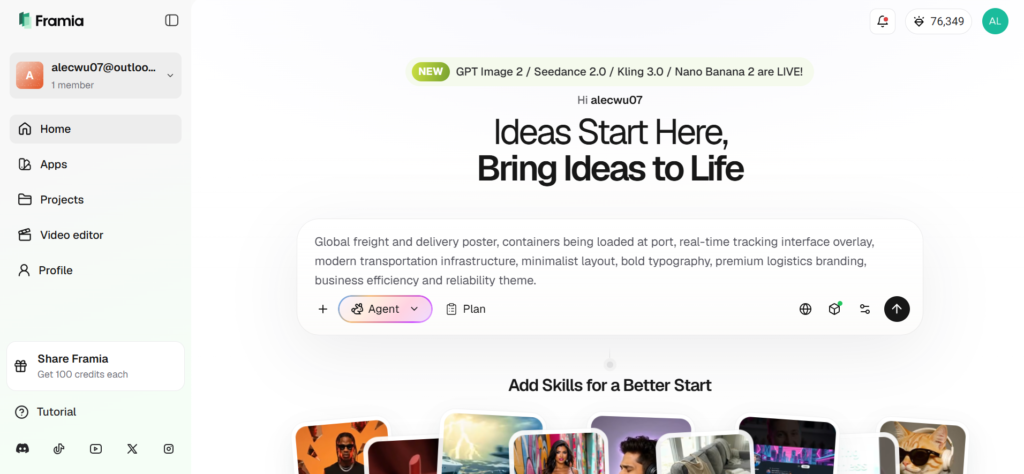
By providing a multimodal creative operating system, Framia enables logistics firms to produce images, videos, graphics, presentations, and marketing assets all in an AI-powered space. There is no need to jump from one software platform to another to do this.
Making complex logistics services easier to understand
No need to beat around the bush—it can be challenging to communicate information about logistics services.
Subjects like optimizing a supply chain, freight forwarding, managing warehouses, and shipping internationally are not always easily understood via text.
Framia’s Intelligent Canvas makes communicating this process easier.
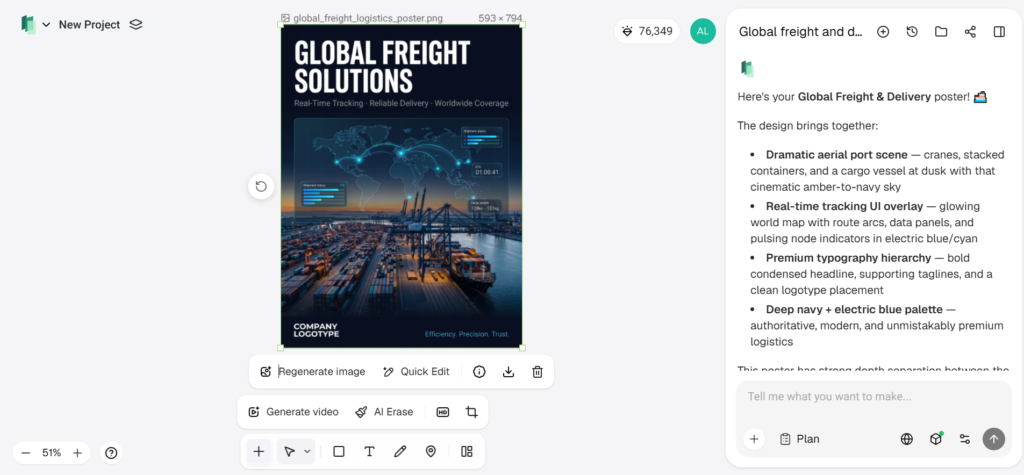
For example, imagine building a visual guide of how products make their way through a company’s logistics network.
Need to update a part of this guide?
Simply choose which portion you would like to change, and then give conversational directions.
Would you like to tweak some visuals according to an audience?
All you have to do is describe what you want to be done!
Conversational editing makes it easier to improve your communications efforts without having to start a project over again.
Customized AI agents made for business communication
In B2B industries like logistics, visual communication has become increasingly popular.
Thanks to Framia’s specialized agents, creating a large range of customer communication materials becomes possible.
The Video Agent creates:
- logistics service explainers
- supply chain explainers
- customer onboarding videos
- case study videos
- brand awareness videos
Shorter videos can be created with the help of the Shorts Agent.
In addition, the Design Agent can produce:
- Infographics
- Service brochures
- Marketing materials
- Trade show graphics
- Educational assets for customers
- Branding presentations
As branding can be incorporated straight into the process, logistic companies will have the ability to maintain consistent visuals in all their interactions with clients.
Content creation for rapidly evolving markets
The logistics sector keeps changing on a daily basis.
Routes change.
Conditions vary.
New services appear.
Expectations rise.
One of the key benefits of Framia lies precisely in its emphasis on iterative content creation.
As opposed to creating static content one time only and going forward from there, users can consistently iterate upon, enhance, and refine their assets through the use of conversation-based editing and editable design output tools.
With Framia, you can be flexible and productive at the same time.
Customer facing platforms after marketing assets
Producing engaging content is merely the first step towards providing an excellent experience to your clients.
When a logistics company acquires clients, it requires mechanisms that allow them to get information, track shipments, make requests, etc.
Here is how the process can logically extend beyond just content creation.
While Framia specializes in content and visual communication creation, Enter takes care of turning these assets into useful platforms.
Smart logistics dashboard development with Enter
Customer dashboards have become a must-have part of logistics services.
Companies are increasingly requesting access to the necessary data about shipments, order status, documents, and other relevant metrics.
Enter allows logistics firms to create such customer-centric solutions using a development and productivity platform tailored for creating apps, websites, and flows powered by artificial intelligence.
Customer portal creation simplified
Traditionally, creating customer-oriented systems would require substantial effort in terms of software development.
But with Enter, companies can easily build:
- customer dashboards
- shipment tracking portals
- client onboarding platforms
- service management systems
- document hubs
- internal flow apps
And this is thanks to the AI-driven approach of app development and design that Enter supports.
Transforming operational insights into customer experiences
The logistics system goes beyond technical solutions.
It becomes an experience creation platform.
People need their data displayed in a concise manner and in real-time.
Enter enables organizations to create digital spaces where visibility increases and friction is eliminated.
Be it about implementing a customer portal, a custom dashboard, or self-service logistics software, AI-driven development processes enable quick delivery of projects in an expandable way.
Collaboration within logistics operations teams
Logistics involves different teams.
There are sales teams to build relations.
There are operational teams to orchestrate logistics.
There are customer service teams to resolve inquiries.
There are management teams to analyze the performance.
With the help of Enter’s collaboration tools, different teams can work simultaneously on digital projects and be aligned on different fronts.
Benefits of AI-powered logistics workflows
When content creation meets digital infrastructure, there is plenty of opportunities for improvement.
More effective customer communication
Clear content enables people to know about your products and processes.
Improved customer experience
Interactive tools increase the transparency of transactions.
Faster content creation
AI-driven tools make content creation faster.
Better operational effectiveness
By connecting different workflows, duplication is minimized, and there is greater collaboration among teams.
Flexibility and growth
Digital solutions ensure that companies can scale their operations to accommodate more customers without added complexity.
Implementing AI into logistics
Pay attention to customer visibility
Transparency is important to customers. Design experiences where information is easily accessible and comprehensible.
Simplify complex information
Make use of pictures, video tutorials, and other methods to communicate logistical operations.
Integrate marketing and operations
Marketing and customer experience operations should be integrated rather than kept separate from each other.
Improving digital experience
The greatest dashboards and marketing content strategies are improved upon continuously.
The future of logistics is linked
The future of logistics goes much deeper than just transporting items from place to place. It means delivering a seamless customer experience driven by intelligent content, clear communication, and strong digital technology.
Framia and Enter are two examples of where this evolution of logistics is heading. Framia allows logistics firms to deliver engaging marketing content, educational tools, and customer communication through multimodal creative production. The Enter solution builds on this by helping companies create dashboards, portals, and other digital tools designed to improve customer interactions and efficiencies.
As artificial intelligence evolves, success in logistics will mean linking creativity, communication, and technology together as part of an integrated system.
