

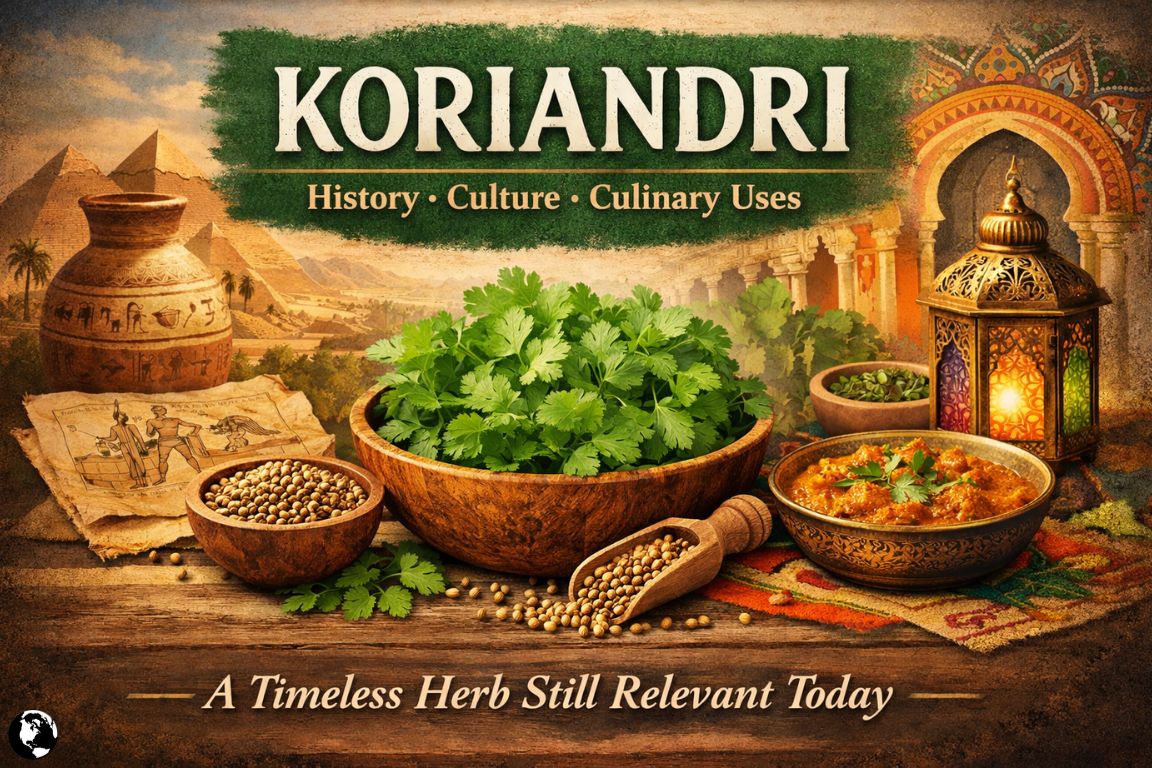

Koriandri refers to a traditional name connected to coriander, a herb that has influenced food and culture for thousands of years. Although modern references often favor standardized terminology, this older variation still appears in culinary traditions and cultural expression. For this reason, understanding koriandri requires more than a definition—it requires context.
This article examines where the term originated, how people use the herb today, and why it continues to hold relevance in modern life.
Historical Origins
Humans cultivated coriander long before written culinary records existed. Archaeological evidence places its use in ancient Egypt, the Mediterranean, and South Asia. As the herb spread through trade, language evolved alongside it. Consequently, regional pronunciations gave rise to variations such as koriandri.
People named herbs based on sensory experience rather than scientific structure. Therefore, aroma, taste, and daily use shaped terminology. Over time, koriandri became associated with freshness and familiarity instead of formal classification.
As a result, the term survived through oral tradition even as standardized language developed.
Linguistic and Cultural Meaning
Today, koriandri functions as a cultural expression rather than a technical label. While coriander remains the botanical term, koriandri reflects how people describe the herb in everyday life.
Moreover, the word often appears in traditional cooking narratives and cultural discussions. Instead of focusing on precision, it emphasizes connection and continuity. In contrast to scientific naming, this usage values experience over taxonomy.
Because of this, koriandri carries emotional and historical meaning that extends beyond language alone.
Culinary Applications
Fresh and Dried Forms
Coriander contributes to cooking in two primary forms: fresh leaves and dried seeds. Each form plays a distinct role. The leaves add brightness and lift, while the seeds provide warmth and depth.
In many regions, koriandri describes either form depending on context. As a result, the term mirrors the herb’s flexibility in the kitchen.
Use Across Cuisines
Cooks around the world rely on this herb:
- In South Asian cuisine, it balances complex spices
- In Middle Eastern dishes, it enhances savory flavors
- In Latin American cooking, it adds contrast and freshness
- In Mediterranean food, it supports herbal blends
Therefore, its global presence reflects function rather than trend. The herb adapts easily to different ingredients and techniques, which explains its long-standing use.
Nutritional and Wellness Context
For centuries, people included coriander in meals for both flavor and balance. Traditional diets treated food as a source of nourishment rather than separation between eating and wellness.
Traditional Use
Historical dietary practices incorporated coriander to support digestion and comfort. Instead of isolating it as a remedy, people added it directly to meals. Consequently, koriandri seemed to represent moderation within daily eating habits.
Modern Perspective
Modern nutrition supports this approach. Coriander contributes beneficial plant compounds when consumed regularly as part of varied meals. While it does not act as medicine, it supports dietary quality.
Therefore, traditional knowledge and modern understanding align more closely than they differ.
Cultural Significance
Coriander has always held symbolic value. Communities used it in ceremonial food, preservation methods, and household traditions. These practices reflected trust in the herb’s consistency and usefulness.
Moreover, family recipes often rely on familiar flavors. The scent of coriander frequently signals tradition, memory, and identity. Because of this emotional connection, koriandri remains present in cultural language and practice.
Modern Relevance
Several modern priorities help explain the herb’s continued importance.
Simplicity in Cooking
Contemporary cooking favors clarity and restraint. Coriander enhances dishes without overpowering them. Therefore, it aligns naturally with minimalist approaches to food.
Sustainability
The plant grows easily in many climates and requires limited resources. As a result, it supports local cultivation and sustainable food systems.
Cultural Preservation
Using traditional terms such as koriandri helps preserve linguistic heritage. In an increasingly standardized world, this preservation holds growing importance.
Common Misconceptions
Many people assume koriandri refers to a different plant. In reality, language variation—not biology—creates the distinction.
Another misconception limits coriander to traditional recipes. However, modern chefs incorporate it into contemporary and fusion dishes with ease.
Clarifying these points broadens understanding and appreciation.
FAQs
What does koriandri mean?
It is a traditional or regional term associated with coriander.
Is koriandri different from coriander?
No. The difference lies in naming, not in the plant itself.
Why does the flavor taste strong to some people?
Genetic differences influence how individuals perceive flavor.
Can it be used in modern cooking?
Yes. It works well in both traditional and contemporary recipes.
Does it add nutritional value?
When used regularly, it contributes beneficial plant compounds to meals.
Conclusion
Koriandri reflects continuity in both language and food. Rather than fading with modernization, it persists because it serves a clear purpose. The herb supports flavor, balance, and cultural identity without relying on trends.
For this reason, koriandri still matters. Its value lies not in promotion, but in consistent usefulness across generations.
