

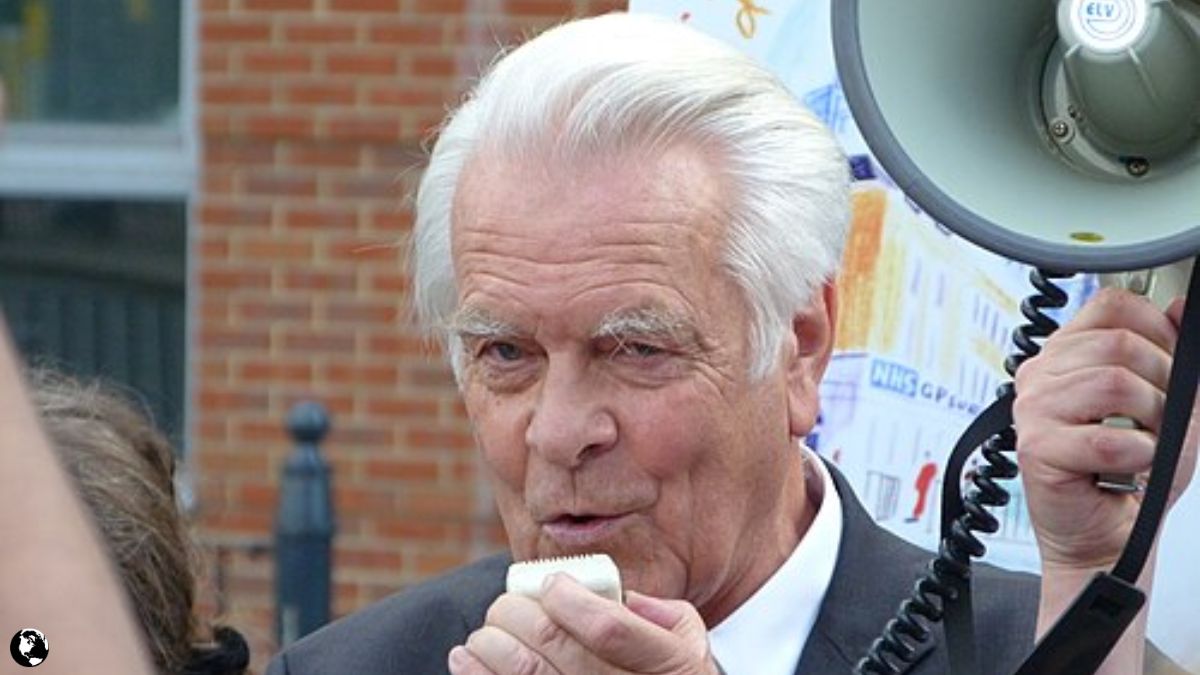

David Owen, formally David Anthony Llewellyn Owen, is a highly influential British physician, politician, author, and diplomat. Born in 1938 in Plymouth, England, Owen’s career spans medicine, national politics, international diplomacy, and authorship. He served as UK Foreign Secretary (1977–1979), co-founded the Social Democratic Party (SDP) in 1981, and played a pivotal role in European peace negotiations during the Bosnian War.
Owen’s career is remarkable not only for its breadth but also for its principled approach to leadership. In a period of shifting political landscapes, he demonstrated intellectual rigor, independence, and an unwavering commitment to public service. His work on political psychology, particularly the concept of hubris syndrome, shows how his medical background informed his understanding of leadership and power. Owen’s story is both a personal biography and a lens into late twentieth-century British politics.
Early Life and Education
David Owen was born on 2 July 1938 in Plymouth, a port city in southwest England with a proud naval and industrial heritage. Growing up during World War II and its aftermath, Owen was exposed to social upheaval, national resilience, and the importance of public duty from an early age. His parents, John William Morris Owen and Mary Llewellyn Owen, were both connected to medicine, instilling in him a respect for education, professionalism, and service.
Owen displayed early aptitude for science and analytical thinking, leading him to pursue medicine at Sidney Sussex College, Cambridge. He later trained at St Thomas’s Hospital in London, specializing in neurological and psychiatric medicine. His medical career was not merely a profession; it shaped his approach to problem-solving, leadership, and politics. The habit of diagnosis before prescription became a hallmark of his political decision-making, emphasizing evidence-based policy and careful analysis of complex situations.
Family and Personal Life
In 1968, David Owen married Deborah Schabert, an American literary agent. The couple has three children and maintained a remarkably private family life despite Owen’s high-profile career. This discretion reflected Owen’s belief in the separation of public service from personal celebrity.
Deborah Schabert also acted as a trusted collaborator in Owen’s writing and public engagements. Their partnership highlights the interplay between personal support and professional achievement, and Owen often credits his family’s stability as a foundation for his principled approach to politics.
Political Career
Rise Through Labour
Owen entered politics as a Labour Member of Parliament for Plymouth Sutton in 1966. From the outset, he was recognized as a serious, ambitious politician with a strong commitment to ideas over party conformity. He served in multiple ministerial roles, including Under-Secretary for the Royal Navy (1968–1970) and Minister of State for Health (1974–1976), where he applied his medical knowledge to public health policy.
His analytical approach, discipline, and independence distinguished him from many contemporaries. Owen was not a consensus builder by nature; he was a conviction politician, willing to take unpopular positions if principles demanded it.
Foreign Secretary (1977–1979)
At just 38 years old, Owen became UK Foreign Secretary, one of the youngest ever in British history. His tenure coincided with a tense period in global politics, including the Cold War, Middle East conflicts, and Britain’s post-imperial adjustments. He prioritized human rights in foreign policy long before it became mainstream, reflecting his medical-informed perspective on human dignity.
Owen was known for directness and pragmatism, often speaking uncomfortable truths in the face of diplomatic challenges. His decisions during this period reflected both courage and intellectual rigor, enhancing his reputation as a serious and independent statesman.
Social Democratic Party (SDP)
In 1981, Owen co-founded the Social Democratic Party (SDP) with Roy Jenkins, Shirley Williams, and Bill Rodgers, later known as the “Gang of Four.” The SDP emerged in response to Labour’s leftward shift, including policies on unilateral nuclear disarmament, withdrawal from the European Community, and nationalization initiatives Owen deemed economically reckless.
The SDP aimed to combine social justice with economic competence, democratic accountability, and a strong European commitment. At its height, the party challenged the traditional two-party system in the 1983 general election, winning nearly as many votes as Labour, though the first-past-the-post system limited its parliamentary representation.
When most of the SDP merged with the Liberal Party in 1988, Owen refused, leading the continuing SDP until it disbanded in 1990. This decision, seen by critics as stubbornness and by supporters as principled integrity, demonstrated Owen’s commitment to vision over convenience.
International Diplomacy
Between 1992 and 1995, Owen served as EU Co-Chairman of the International Conference on the Former Yugoslavia, working alongside UN envoy Cyrus Vance. He co-authored the Vance-Owen Peace Plan (1993), aiming to end the Bosnian War through an ethnically defined cantonal system. Though the plan ultimately failed when rejected by the Bosnian Serb assembly, Owen’s diplomatic efforts are widely respected for their moral and strategic rigor.
His work during this period required negotiation with multiple stakeholders, including national leaders, international organizations, and warlords, often under intense scrutiny. Owen’s medical and analytical skills were critical in navigating the complexities of post-war diplomacy.
Hubris Syndrome and Writings
One of Owen’s most influential contributions is the concept of hubris syndrome, a personality disorder observed in leaders holding prolonged, unchecked power. Traits include excessive self-confidence, contempt for advice, reckless decision-making, and detachment from reality.
Owen detailed this in The Hubris Syndrome: Bush, Blair and the Intoxication of Power (2007) and co-founded the Daedalus Trust to promote research and awareness. His work bridges psychiatry and political science, offering practical insights for understanding leadership failures and ethical governance.
Owen’s other notable work, Balkan Odyssey (1995), provides a first-hand account of diplomacy during the Yugoslav conflict, combining personal narrative with historical analysis.
Career Timeline
| Year | Event |
|---|---|
| 1938 | Born in Plymouth, England |
| 1966 | Elected MP for Plymouth Sutton |
| 1968–1970 | Under-Secretary for the Royal Navy |
| 1974–1976 | Minister of State for Health |
| 1977–1979 | UK Foreign Secretary |
| 1981 | Co-founded SDP |
| 1988–1992 | Leader of continuing SDP |
| 1992–1995 | EU Co-Chairman, Former Yugoslavia |
| 1992 | Created Baron Owen of Plymouth |
| 2024 | Retired from House of Lords |
Legacy
David Owen’s legacy is defined by principled leadership, intellectual rigor, and public service. He shaped British politics, influenced party dynamics, and contributed original ideas to political psychology. His work on hubris syndrome remains a standard reference for understanding the dangers of prolonged power.
Owen exemplifies a life in which private values guide public action, demonstrating courage in decision-making, integrity in leadership, and commitment to diplomacy in crisis.
FAQs
Who is David Owen?
A British physician, politician, diplomat, and author. Former UK Foreign Secretary and SDP co-founder.
What is hubris syndrome?
A political personality disorder described by Owen, affecting leaders who hold power for long periods without accountability.
Why did Owen co-found the SDP?
To provide a centrist alternative when Labour shifted left in the early 1980s.
What was his role in the Balkans?
EU Co-Chairman of the International Conference on the Former Yugoslavia; co-authored the Vance-Owen Peace Plan.
When did he retire from public office?
2024, from the House of Lords.
How did Owen influence UK healthcare policy?
Applied his medical expertise as Minister of State for Health, emphasizing evidence-based approaches and patient welfare.
What lessons can future leaders learn from Owen?
The importance of integrity, evidence-based decision-making, principled action, and balancing private values with public responsibilities.
