

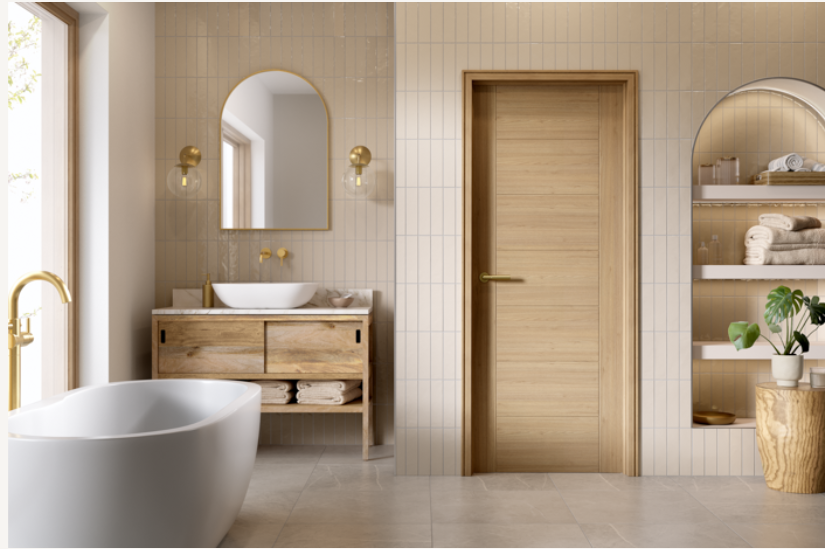

When considering internal doors, it is understandable that the first thing to think about is aesthetics. While important, internal doors must also perform well on a second level: longevity. A door that catches the eye today and starts showing wear within a few years is not a good investment for a homeowner.
Fortunately, oak solves both these issues at once. It is one of a select few materials that can offer both longevity and aesthetics, which is why it is still one of the most popular choices for any type of property. From a family home to a high-end development, oak offers a level of quality hard to beat at a comparable price.
This guide walks you through exactly how internal oak doors enhance both durability and style, and what to consider before you buy.
Why Oak Is a Durable Choice?
Oak is a hardwood, which means it is harder and denser than the types of wood used to make most internal doors you are familiar with. This makes it incredibly resilient to the knocks and scrapes a door might receive in a busy household.
In situations like this, you should be aware that the quality of an oak internal door is far more important than you might think when you first start considering your purchase. It is also worth making sure you know the difference between solid oak and engineered oak before you place your order.
Internal oak doors are available in both engineered and solid oak styles. Solid oak doors are cut from solid oak and retain the full density of the wood throughout. Engineered oak doors have a real oak veneer with a core to prevent warping when humidity and temperature change. Both are very durable doors, though engineered oak tends to perform better when moisture levels fluctuate, such as in kitchens or with underfloor heating.
Oak is also good at holding fixings in place. Hinges, latches, and door handles fit well into an oak door, and they stay that way over time. On cheaper softwood or hollow doors, they may come loose over time with use. This is not usually the case with oak, which is why it is used in homes where doors are subject to heavy use.
The Grain Does the Styling for You
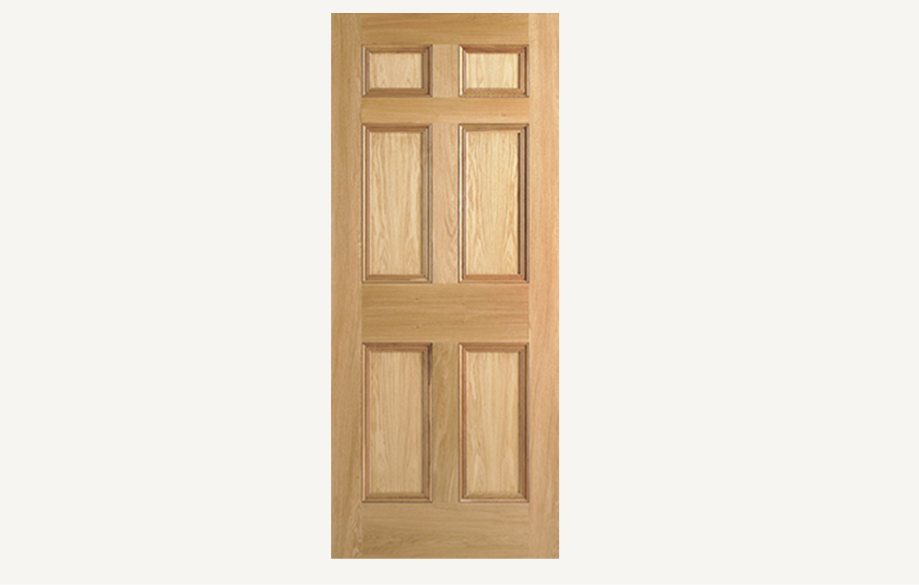
No two oak doors are ever alike. The grain pattern and marks within the wood give it a unique character that a painted or foil-covered door cannot mimic. This is a big part of why oak is considered a premium material that is hard to create artificially. You are not simply buying a door; you are bringing a natural product into your space that has a depth and beauty all of its own.
Oak is also suitable for a far broader range of interior styles than most people realise. In a traditional or old property, oak doors will fit in beautifully alongside wooden floors and beams, and antique door handles. In a modern space, a clean-cut oak door adds depth and texture without compromising the aesthetic. There are very few materials that can be used across this many different styles, and oak does so beautifully.
The tone of the oak is another factor to consider. A lighter, gold-tinged oak is well suited to an airy, Scandinavian-inspired look, while a deeper, richer finish is better suited to a more traditional space. With prefinished oak doors, you can be sure of a uniform look across your property, rather than having to worry about the look of individual doors varying from room to room.
Finish Determines How It Performs Over Time
Another very practical decision to make before buying doors is whether to buy them prefinished or unfinished. This is worth considering early in the process, as it will affect the cost and duration of your project.
Prefinished oak doors are available pre-hung, with the lacquer or stain applied during manufacturing. This ensures an even finish that’s properly sealed, protecting the wood from the start. For residential projects, this is the obvious choice. There’s no work to do before hanging the doors, and the finish will be more even and longer-lasting if applied during the factory process.
Unfinished oak offers the flexibility to apply your own finish, such as stain or oil, in the precise colour you want to match an existing floor or interior scheme. This finish is particularly suited to individuals who require an exact match in terms of colour or sheen, which may not be possible with an existing finished product. However, the downside is that finishing work must be completed before the door is hung, depending on the quality of the finish achieved during the preparation stages. It is recommended that an unfinished oak door be sealed on all surfaces, edges, and the top and bottom before hanging. Failure to do so will leave the door vulnerable to moisture, leading to movement or warping over time.
Style You Pick Changes How a Room Feels
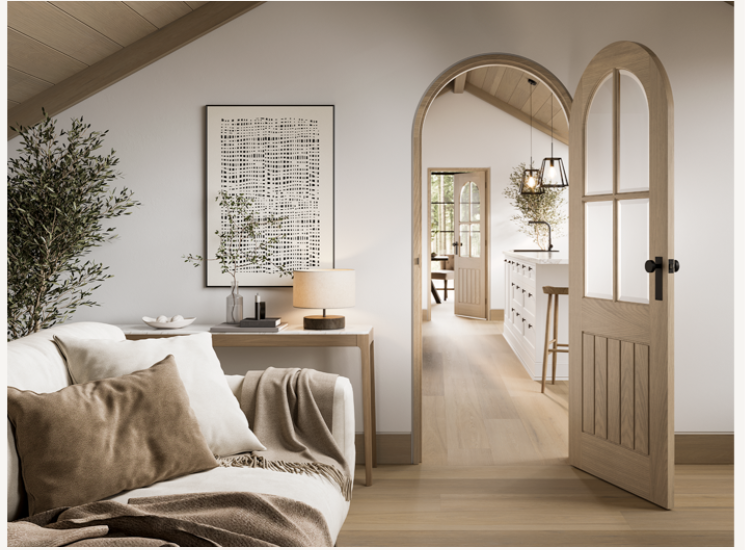
Oak doors come in a wide range of designs, and choosing the right style for each room before you order makes a significant difference to the end result. A couple of styles that may be considered include:
- Shaker-style oak doors – Inspired by the minimalist aesthetic, they offer a sleek look that can complement any home, from a traditional farmhouse kitchen to a contemporary living room.
- Cottage-style oak doors – Perfect for anyone who wants to add a sense of warmth and character to a room. Whether you live in an old house or a new one and are looking for a cosier feel, then cottage-style oak doors are perfect for you.
- Georgian-style oak doors – This style features a rectangular panel, making it a good choice for any home. It would be a good choice for both traditional and contemporary homes.
Planning a style for each room rather than for the entire house is likely to yield a more desirable outcome. A panel door could be suitable for a living area or study, while a flush door is better suited to a bedroom or a more modern kitchen.
The Right Hardware Is What Pulls It All Together
The type of ironmongery used can have a greater impact on the finished result than most people think, and it is therefore worthwhile deciding on this before ordering the doors rather than afterwards. Oak is a fairly neutral material, so it should go well with most types of ironmongery, although some combinations are better than others.
For example, brushed brass and antique bronze are good options because they complement the oak’s grain. These are particularly good options if a traditional or period-style look is desired. Satin chrome and gunmetal are better suited to a more contemporary look, as these finishes tend to pair with a generally cooler, more subtle colour palette. Matt black ironmongery is becoming increasingly popular, creating a strong contrast with the lighter tones in the oak. It can therefore create a very design-focused look if carried out well.
Ensuring that this decision is made at the same time as the door decision ensures that all relevant considerations can be taken into account. The handles, hinges, and latches all need to be suitable for the door’s weight and depth, so it can be frustrating if they are not all sourced at the same time.
Oak Adds Long-Term Value to a Property
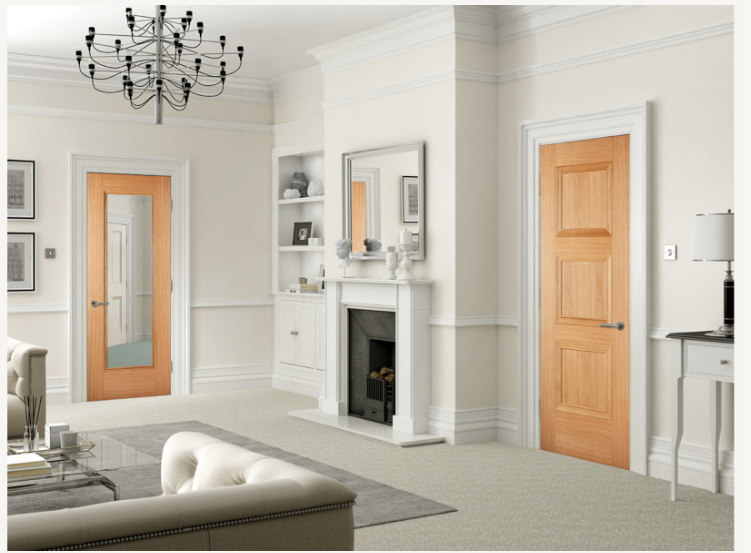
Beyond their visual appearance, oak doors contribute to a property’s quality perception and can influence potential renters or buyers. When competing for renters or buyers, the small factors that can influence perception can make a big difference. For one, oak doors convey a level of quality that hollow core doors do not, and this perception does not change over time, as oak doors do not degrade in the same way hollow core doors do.
For developers and landlords, this can be a cost advantage, as doors that can withstand longer periods are more cost-effective, even if the initial cost is slightly higher for a hollow-core door.
Frequently Asked Questions
Are oak doors more durable than painted doors?
Generally, yes. Oak is a hardwood, and as such, is more resistant to knocks, bumps, and wear than many painted doors, whose cores are made of softwood or medium-density fiberboard.
Do oak doors work in modern interiors?
Yes, oak doors are suitable for a modern interior. Oak is a wood suitable for a range of interior designs, including modern and traditional.
Do I need to treat an unfinished oak door before hanging it?
Yes, an unfinished oak door should be treated on all sides, including top and bottom, before hanging. Failure to treat all sides of an oak door could result in warping, as oak is susceptible to moisture.
The Bottom Line
Oak offers durability and style without forcing you to choose between the two. It resists the tests of daily use, ages well, and complements a broader range of interior styles than almost any other option.
Whether you’re designing a room or specifying doors for an entire building, oak is a decision that will prove itself over time in terms of both durability and appearance. Carefully planning the specifics before you begin, ensuring you get the doors you want, the way you want them, can make all the difference in the finished result.
