

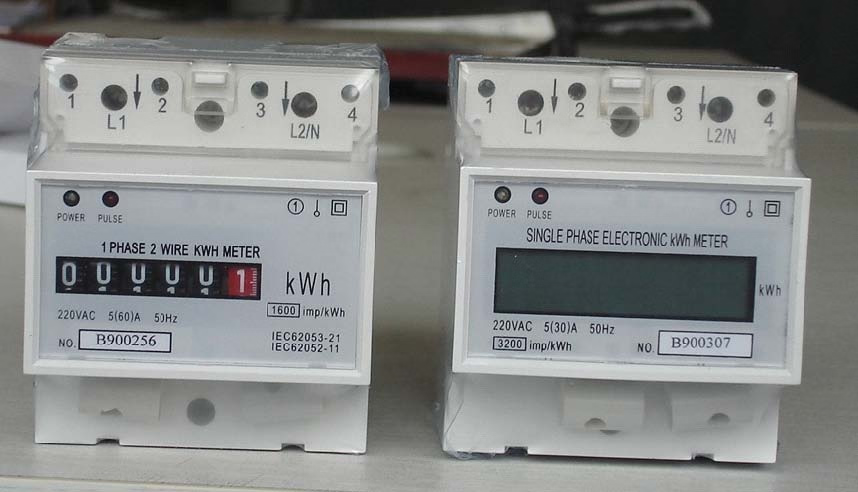

Energy costs continue to spiral across the entire UK. Accurate monitoring and allocation of electricity consumption has now become increasingly crucial, especially for commercial buildings, industrial facilities, and multi-tenant properties. Sub-metering is the practice of measuring energy usage at individual circuits, departments, tenants, or equipment. It provides the much-needed visibility to owners, helping them to manage costs effectively. This encourages conservation and ensures fair billing. At the heart of modern sub-metering systems sits the DIN rail kWh meter, a compact, versatile solution that has become the standard for distributed energy measurement.
Unlike traditional panel-mounted meters that require dedicated enclosures, DIN rail kWh meters mount directly onto standard 35mm DIN rails within electrical distribution boards. This space-efficient design, combined with straightforward installation and reliable performance, makes them ideal for sub-metering applications ranging from office buildings to manufacturing facilities.
This guide explores why DIN rail mounted meters have become the preferred choice for modern energy management systems.
Understanding DIN-Rail kWh Meters
Before examining their sub-metering advantages, it’s essential to understand what distinguishes DIN rail kWh meters from other electricity meters.
Modular Design: These meters are designed to occupy specific module widths on standard DIN rails, typically ranging from 1 to 7 modules (each module equals 18mm). This standardised sizing allows multiple meters to be installed side-by-side in distribution boards alongside circuit breakers and other protection devices.
Integrated Construction: Unlike traditional meters, which require separate mounting boxes, DIN-rail meters combine all measurement electronics in a compact housing that clips directly onto the rail. Connections are established using screw terminals on the meter body, simplifying wiring.
Single and Three-Phase Options: Manufacturers offer both DIN rail kWh meter single-phase variants for monitoring individual circuits or small loads and 3-phase kWh meter DIN rail versions for measuring balanced and unbalanced three-phase systems standard in industrial and commercial applications.
Advanced Functionality: Modern DIN-rail meters go beyond basic kWh measurement, often incorporating features like multi-tariff capability, pulse outputs, Modbus communication, and measurement of additional parameters, including voltage, current, power factor, and harmonics.
Space Efficiency in Distribution Boards
One of the most compelling advantages of the DIN rail mounted KWH meter is its efficient use of valuable panel space.
Compact Footprint: Traditional panel-mounted meters require cutouts in enclosure fronts plus adequate depth for the meter body. DIN-rail meters eliminate these requirements, mounting within the existing distribution board alongside other components. A single-phase meter might occupy just four modules (72mm width), whilst a comprehensive three-phase meter typically uses 6-7 modules.
Multiple Meters in Limited Space: Sub-metering often requires monitoring numerous circuits. A standard distribution board can accommodate multiple DIN-rail meters, where traditional meters would require entirely separate enclosures. This density is particularly valuable in retrofits where space is constrained.
No Additional Enclosures: Each traditional meter typically needs its own housing or dedicated panel space. DIN-rail meters integrate into existing infrastructure, eliminating the cost and space requirements of additional enclosures.
Organised Layout: Mounting meters alongside their associated circuit breakers creates logical, easy-to-understand layouts. Electricians can quickly identify which meter monitors which circuit, simplifying maintenance and troubleshooting.
Simplified Installation and Commissioning
The DIN rail kWh meter design streamlines installation, reducing labour costs and project timelines.
Tool-Free Mounting: Meters clip onto DIN rail in seconds without screws, brackets, or specialised tools. This rapid mounting accelerates installation, particularly when deploying multiple meters across a facility.
Standardised Wiring: Terminal arrangements follow industry conventions, making wiring straightforward for electricians familiar with DIN-rail components. Clear terminal markings and consistent layouts across different models minimise wiring errors.
Minimal Enclosure Modification: Because meters mount internally on the rail rather than requiring panel cutouts, distribution board modifications are minimised. In many cases, sub-metering can be added to existing boards without any enclosure alterations.
Flexible Positioning: Meters can be positioned anywhere along the DIN rail where space exists, providing layout flexibility. If board configurations change, meters can be easily relocated by unclipping and repositioning.
Reduced Commissioning Time: Integrated designs with pulse outputs or Modbus communication simplify connection to building management systems or data loggers. Commissioning multiple submeters becomes far quicker than wiring traditional meters.
Single-Phase and Three-Phase Applications
The availability of both DIN rail kWh meter single-phase and three-phase variants makes DIN-rail meters suitable for virtually any sub-metering application.
Single-Phase Sub-metering: Compact single-phase meters effectively monitor individual office suites, retail units, lighting circuits, and equipment operating on single-phase supplies. These typically measure voltage, current, active energy (kWh), and often reactive energy (kVArh), providing comprehensive monitoring in minimal space.
Three-Phase Requirements: Industrial equipment, HVAC systems, and commercial facilities often use three-phase power. The three-phase kWh meter DIN rail versions monitor all three phases plus neutral, measuring balanced and unbalanced loads accurately. This is essential for facilities with motors, transformers, or other three-phase equipment.
Mixed Installations: Real-world facilities typically require both single and three-phase metering. The modular nature of DIN-rail meters allows mixing meter types within the same distribution board, with each meter sized appropriately for its circuit.
Load Flexibility: DIN-rail meters are available in various current ratings—from 6A to 100A direct connection, with higher currents measured via current transformers. This flexibility ensures optimal meter selection for each application.
Key Applications for Sub-metering
DIN rail kWh meters excel in numerous sub-metering scenarios common across the UK commercial and industrial sectors.
Multi-Tenant Buildings: Office buildings, retail centres, and mixed-use developments require accurate tenant billing. Individual meters for each tenant space ensure fair cost allocation based on actual consumption rather than arbitrary area-based estimates.
Manufacturing Cost Centres: Industrial facilities often need to track energy consumption by production line, department, or process. Sub-metering identifies inefficient equipment, supports process optimisation, and enables accurate product costing.
Building Service Monitoring: HVAC, lighting, IT equipment, and other building systems represent distinct loads worth monitoring separately. Understanding consumption patterns for each system guides energy-saving initiatives and identifies faults.
EV Charging Infrastructure: As workplace EV charging becomes common, sub-metering ensures users pay for the electricity they consume. Meters track per-session usage for fair billing or reimbursement.
Renewable Energy Monitoring: Facilities with solar panels or other renewable generation use submeters to monitor generation versus consumption, track export to the grid, and validate renewable energy credits.
Equipment Performance: Critical or expensive equipment benefits from dedicated metering. Tracking consumption patterns helps identify performance degradation, maintenance needs, or unexpected operation.
Integration with Energy Management Systems
Modern DIN rail mounted kWh meters provide connectivity options that enhance their value in comprehensive energy management programmes.
Pulse Outputs: Many meters include configurable pulse outputs (typically SO+ outputs) that generate pulses proportional to energy consumed. These pulses connect to building management systems, PLCs, or data loggers for centralised monitoring without complex protocols.
Modbus Communication: Meters with RS-485 Modbus RTU or TCP capability enable digital communication with energy management software. This provides real-time access to all measured parameters, including kWh, voltage, current, power factor, demand, and more.
Multi-Meter Networks: Modbus allows daisy-chaining multiple meters on a single communication bus, dramatically reducing wiring costs compared to pulse output wiring. A single RS-485 cable can connect dozens of meters to the monitoring system.
Remote Monitoring: When integrated with internet-connected gateways, DIN-rail meter data becomes accessible remotely via cloud platforms. Facility managers monitor consumption from anywhere, receive alerts about anomalies, and generate reports without site visits.
Third-Party Integration: Industry-standard communication protocols ensure compatibility with energy management software from various vendors, preventing vendor lock-in and supporting system upgrades.
Cost Benefits of DIN-Rail Sub-metering
Beyond technical advantages, DIN-rail kWh meters offer compelling economic benefits.
Lower Installation Costs: Reduced labour for mounting, wiring, and commissioning translates to lower project costs. The time savings are compounded significantly when multiple meters are installed across a facility.
No Additional Enclosures: Eliminating separate meter enclosures saves material costs and valuable electrical room space. This is particularly significant in retrofit projects where space is at a premium.
Accurate Cost Allocation: For multi-tenant buildings, accurate sub-metering eliminates disputes over shared utility bills. Landlords can confidently bill based on measured consumption, whilst tenants pay only their fair share.
Identifying Waste: Sub-metering visibility reveals consumption patterns that are invisible when monitoring whole buildings. Many facilities discover significant savings opportunities—equipment left running unnecessarily, faulty equipment consuming excess energy, or distribution losses—that quickly justify sub-metering investment.
Supporting Sustainability Goals: UK organisations increasingly face sustainability reporting requirements. Granular sub-metering data supports carbon footprint calculations, validates emission reduction initiatives, and provides evidence for green building certifications.
Flexible Tariff Management: Meters with multi-tariff capability track consumption during different rate periods, enabling accurate cost allocation under time-of-use tariffs and supporting demand response programmes.
Selecting the Right DIN-Rail Meter
Choosing appropriate DIN-rail kWh meters requires considering several technical factors.
Phase Configuration: Determine whether circuits require single-phase or three-phase measurement. The DIN-rail kWh meter single phase suffices for most individual loads, while the 3-phase kWh meter DIN rail is necessary for three-phase equipment and distribution circuits.
Current Rating: Select meters with appropriate direct measurement ranges, or specify CT-operated versions for higher currents. Direct connection meters typically handle 6A to 100A, whilst CT-operated meters measure virtually any current.
Accuracy Class: Sub-metering for tenant billing typically requires Class 1 (±1%) or better accuracy under MID (Measuring Instruments Directive) approval.
Communication Requirements: Based on your monitoring system architecture, decide whether pulse outputs, Modbus communication, or both are needed.
Measured Parameters: Basic meters measure only active energy (kWh). Advanced meters also measure reactive energy, demand, harmonics, and power quality parameters. Choose based on your monitoring objectives.
Module Width: Verify the available space on distribution boards. Single-phase meters range from 1 to 4 modules, whilst three-phase meters typically require 4 to 7 modules, depending on functionality.
Compliance and Approvals: For billing applications, ensure meters carry MID approval. Other relevant standards include IEC 62053 for accuracy and IEC 62052 for general requirements.
Installation Best Practices
Whilst DIN-rail kWh meter installation is straightforward, following best practices ensures optimal performance.
Adequate Clearance: Maintain recommended clearances around meters for ventilation and heat dissipation. Most meters specify minimum spacing requirements.
Correct CT Installation: For CT-operated meters, ensure current transformers are appropriately sized, correctly oriented, and securely mounted. Incorrect CT installation is the most common source of measurement errors.
Separate Control Circuits: For meters with pulse outputs or communication connections, consider running control wiring separately from high-current power cables to minimise electrical noise.
Proper Termination: Ensure all terminal connections are tight and correctly torqued. Loose connections cause measurement errors and potential safety hazards.
Protective Devices: Install appropriate circuit protection (fuses or breakers) for meter voltage circuits, particularly when multiple meters share a standard supply.
Documentation: Clearly label meters indicating which circuits they monitor. Maintain records of CT ratios, communication addresses, and configuration settings.
Future-Proofing Your Sub-metering System
As energy management requirements evolve, DIN-rail mounted kWh meters provide valuable flexibility.
Scalable Architecture: The modular nature allows adding more submeters as monitoring needs expand. Additional meters integrate seamlessly with existing installations.
Communication Upgrades: Facilities can start with basic pulse-output meters and later add Modbus-capable units or gateways to enable advanced monitoring without replacing the entire system.
Smart Building Integration: As buildings become more intelligent and more connected, existing DIN rail meter infrastructure readily integrates with IoT platforms and artificial intelligence-driven energy optimisation systems.
Regulatory Compliance: Increasingly stringent energy reporting requirements are easily met with comprehensive sub-metering data. Installing meters proactively positions facilities ahead of regulatory changes.
Making the Smart Choice
DIN-rail kWh meters have earned their position as the standard solution for sub-metering applications through a combination of compact design, straightforward installation, reliable performance, and economic benefits. Whether monitoring tenant spaces, tracking departmental consumption, or analysing equipment performance, these versatile meters provide the visibility needed for effective energy management.
For commercial buildings and industrial facilities planning sub-metering projects, DIN rail mounted meters offer the optimal balance of capability, cost, and convenience. Their modular design integrates seamlessly into existing electrical infrastructure whilst providing the accurate, reliable data that drives informed energy decisions.
Effective energy management begins with accurate measurement. Choose DIN rail kWh meters for the visibility, reliability, and flexibility your sub-metering project demands.
