

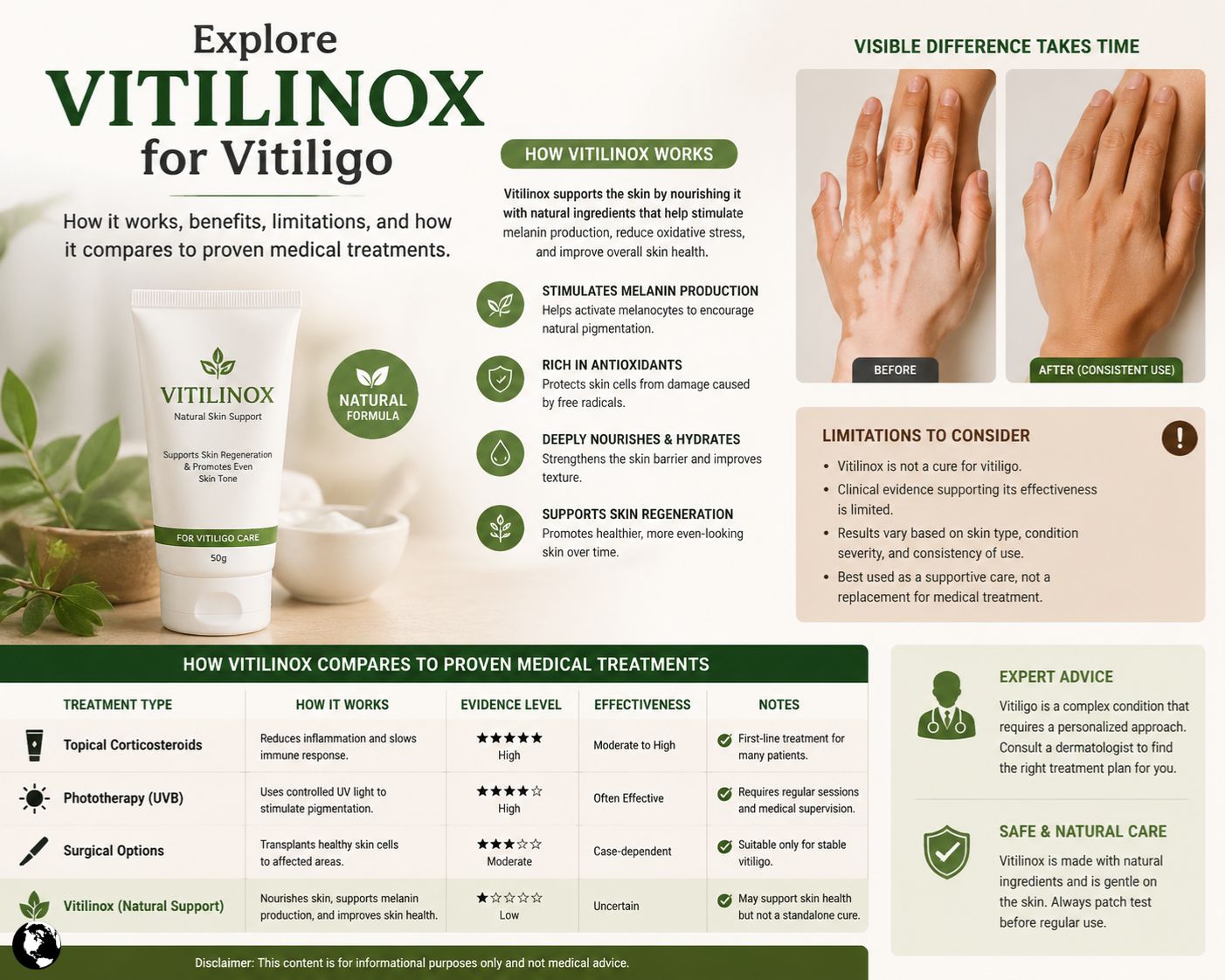

Vitiligo is a chronic skin condition that results in the loss of pigmentation, creating white patches on different areas of the body. It affects millions of people worldwide, often impacting both physical appearance and psychological well-being. While vitiligo can be treated with medical options like topical corticosteroids and phototherapy, many individuals seek natural alternatives such as Vitilinox. This article examines Vitilinox: what it is, how it works, its potential benefits and limitations, and how it compares to medically approved treatments for vitiligo.
Disclaimer: This content is for informational purposes only and not medical advice.
What is Vitilinox?
Vitilinox is a topical product that claims to offer a natural solution for people with vitiligo. It aims to support skin regeneration and promote even pigmentation by stimulating the production of melanin, the pigment responsible for skin color. The product combines plant-based extracts, vitamins, and moisturizing agents to improve overall skin health.
It’s important to note that Vitilinox does not have medical approval for treating vitiligo, and limited clinical evidence supports its effectiveness.
How Vitilinox Works for Vitiligo
Vitilinox claims to help those suffering from vitiligo by promoting melanocyte function. Melanocytes are the cells responsible for producing melanin, and when they stop working or are destroyed, depigmented areas develop. Vitilinox is said to support the function of these cells, thereby encouraging the repigmentation of the skin.
Key Ingredients
Vitilinox contains several active ingredients known for their skin-supporting properties, such as:
- Vitamin E: A powerful antioxidant that protects skin cells from damage.
- Herbal Extracts: Often used in skincare for their soothing and anti-inflammatory effects.
- Moisturizing Agents: Help maintain hydration and improve the skin’s barrier function.
- Pigmentation-Supporting Compounds: Marketed as melanin stimulators, although evidence for these claims in over-the-counter products is limited.
The Benefits of Vitilinox for Vitiligo Treatment
While Vitilinox is not a cure for vitiligo, it may offer some benefits for individuals looking to improve their skin appearance and support overall skin health.
1. Non-Invasive and Easy to Use
Vitilinox is a topical treatment that can be applied as part of a daily skincare routine. Unlike more invasive treatments, Vitilinox does not require medical supervision, making it a convenient option for people seeking a non-invasive solution.
2. Hydrates and Repairs the Skin
Vitilinox’s moisturizing agents help to keep the skin hydrated, reducing irritation and promoting a healthier skin barrier. Well-hydrated skin can reduce the visibility of white patches, improving the overall appearance of the skin.
3. Supports Cosmetic Improvement
While it doesn’t cure vitiligo, Vitilinox may help to reduce the visual contrast between pigmented and depigmented areas. For some users, this can result in a more even skin tone, boosting confidence.
4. Complementary to Medical Treatments
Vitilinox can be used alongside other medically approved treatments, like corticosteroids or phototherapy. It may serve as a supportive option that enhances skin hydration and overall health during the course of more conventional treatments.
Limitations and Risks of Vitilinox
While Vitilinox offers some potential benefits, there are limitations and risks to consider.
1. No Proven Cure for Vitiligo
Vitilinox does not cure vitiligo. It is a cosmetic solution that may help manage the appearance of the condition, but it will not fully restore skin pigmentation in every individual.
2. Limited Clinical Evidence
Currently, there is no substantial peer-reviewed research supporting the efficacy of Vitilinox as a primary treatment for vitiligo. The available evidence is primarily anecdotal, and clinical trials are limited.
3. Results May Vary
Due to the variable nature of vitiligo, the effectiveness of Vitilinox can differ from person to person. Factors such as skin type, the extent of vitiligo, and individual responses to treatment can influence the results.
4. Possible Skin Reactions
Though it is marketed as a natural product, there is still a risk of skin irritation or allergic reactions. A patch test is recommended to check for any adverse effects before applying it to larger areas of the skin.
Vitilinox vs. Medical Treatments: A Comparison
While Vitilinox is an alternative for those interested in a natural skincare approach, medical treatments remain the primary method for managing vitiligo. Here is a comparison between Vitilinox and established medical treatments:
| Treatment Type | Evidence Level | Effectiveness | Notes |
|---|---|---|---|
| Topical Corticosteroids | High | Moderate to High | Reduces inflammation and stabilizes patches. |
| Phototherapy (UVB) | High | Often Effective | Requires professional supervision. |
| Surgical Options | Moderate | Case-dependent | Used for stable vitiligo, especially in localized areas. |
| Natural Products (Vitilinox) | Low | Uncertain | Primarily cosmetic benefits, not a cure. |
While Vitilinox may provide some cosmetic support, it should not replace traditional medical treatments for vitiligo. Always consult a healthcare professional for personalized treatment recommendations.
When to Seek Professional Advice
If you are using Vitilinox or any other treatment for vitiligo and notice any of the following, it is important to consult a dermatologist:
- Rapid spreading of depigmented areas
- No improvement after using over-the-counter products
- Severe irritation or worsening of skin conditions
- Emotional distress due to the appearance of vitiligo
A dermatologist can help determine the most appropriate treatment plan for your specific condition.
Is Vitilinox Worth Considering?
For those looking for a non-invasive, natural option to complement existing treatments for vitiligo, Vitilinox can be worth considering. It may provide supportive benefits like skin hydration, improving skin appearance, and reducing the contrast between pigmented and depigmented areas. However, it is essential to manage expectations, as it is not a cure and results vary from person to person.
Vitilinox should be viewed as a complementary solution, not a primary treatment. Always consult with a healthcare provider to ensure that you are following the most appropriate care plan for your vitiligo.
Conclusion
Vitiligo is a complex skin condition that often requires a combination of treatments. While Vitilinox may offer some benefits in improving skin appearance, it should not be relied upon as a cure or standalone treatment. It is best used as part of a broader, medically guided approach to managing vitiligo.
For those seeking to manage vitiligo effectively, it is essential to work with a healthcare provider and explore both medical and natural treatment options.
FAQs
1. Does Vitilinox cure vitiligo?
No, Vitilinox does not cure vitiligo. It may provide cosmetic support and improve skin appearance but does not reverse the condition entirely.
2. How long does it take to see results with Vitilinox?
It may take several weeks or months to notice any improvement, and results will vary depending on individual skin response.
3. Is Vitilinox safe for all skin types?
Generally, Vitilinox is safe for most skin types, but a patch test is recommended to avoid any adverse reactions.
4. Can Vitilinox replace medical treatments for vitiligo?
No, Vitilinox should not replace dermatologist-recommended treatments. It is best used alongside medical treatments to support overall skin health.
5. How can I manage my vitiligo effectively?
Consult with a dermatologist to determine the most appropriate treatment options. Medical treatments like corticosteroids, phototherapy, and possibly Vitilinox can be part of a comprehensive care plan.
