

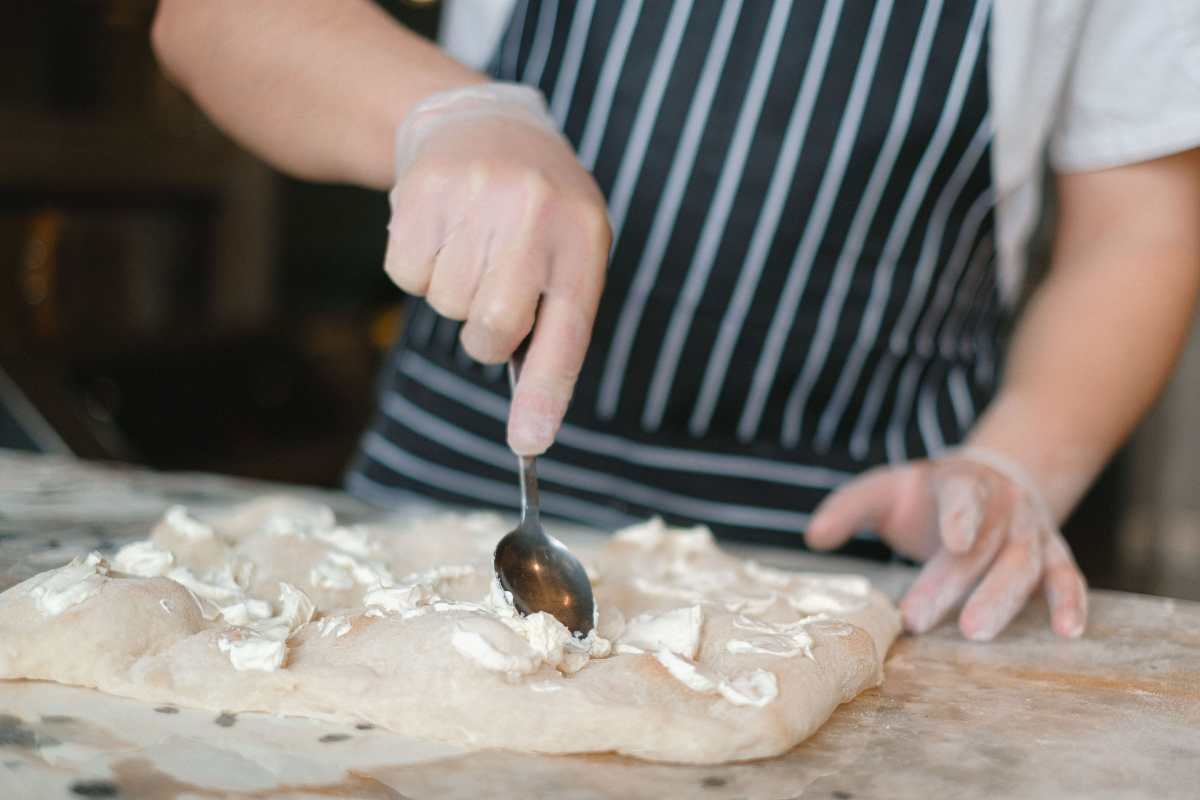

Oval, irregular, with a surface dotted with bubbles and an edge that crunches when you bite into it, Roman pinsa has carved out a place alongside pizza in just a few years, both in restaurants and in supermarket refrigerated aisles, in Italy and abroad.
Today’s recipe has a definite date of origin. It was developed in 2001 by Corrado Di Marco, an entrepreneur and expert in breadmaking, with a clear idea in mind: a light, fragrant base made with different flours, plenty of water and a long resting time.
Three flours in one blend
At the heart of pinsa is a blend of three flours: wheat, soy and rice. Their exact proportions are kept secret by the company. Each plays its own part, and the character of the dough comes from the way they work together.
Wheat flour
When looking at the original ingredients of authentic pinsa romana, we have to start with the main component of the blend: Italian type 0 soft wheat flour, which gives the dough structure and a bread-like flavour. Wheat gluten forms an elastic network that holds water and the gases produced during fermentation. That network creates the crumb full of large and small air pockets you see when you break a pinsa in half.
In Italy, soft wheat flours are classified according to how finely they are refined: from 00, the whitest, through 0, 1 and 2, to wholemeal. Type 0 retains slightly more of the grain’s outer layers than type 00.
Soy flour
Soy flour is added in smaller quantities and mainly affects the crust: it makes it crisp and easy to break, while giving it a deeper golden colour. Rich in protein and fibre, it has a slightly toasted flavour that is barely noticeable after baking. In the original recipe, it also contributes to the lightness of the base.
Rice flour
This flour was included for a reason. It helps retain water that would otherwise escape as steam during baking, keeping it in the dough until the very end. The result is the contrast typical of a freshly baked pinsa: a soft, almost moist interior and a crisp base. As it contains no gluten, rice flour also lightens the blend.
Sourdough and long maturation
The sourdough used in pinsa is dried wheat sourdough, added directly to the flour blend. Sourdough begins as a mixture of flour and water in which yeasts and lactic acid bacteria coexist – the same kind of starter that bakers have refreshed daily for generations. Once dried, it becomes a stable powder that is easy to measure and store.
Compared with baker’s yeast, sourdough gives the dough a faint tang, produced by the lactic acid bacteria, which is most noticeable in the crust. It works slowly and needs time: the dough matures for up to 72 hours before it is divided, stretched and baked.
During those three days, enzymes naturally present in the flour break down some of the starches and proteins, the flavours become more complex, and the gluten network strengthens enough to hold all the water in the dough.
Time is, in effect, an ingredient in its own right; the long fermentation with sourdough makes pinsa easier to digest.
Water, salt and extra virgin olive oil: 80% hydration
After the flours, water is the most abundant ingredient. The percentage is always calculated against the weight of the flour, and it is generally lower in more common pizza doughs. When handled, pinsa dough is soft and almost sticky. It is difficult to work with straight away, as we need to preserve the air built up over the days of maturation.
In the oven, all that water turns to steam, expands the air pockets and leaves a light crumb, while the crust browns and becomes crisp. Salt comes next, regulating fermentation and adding flavour, followed by extra virgin olive oil, which softens the dough and gives the base its aroma even before any toppings are added.
Why these ingredients matter on the plate
The irregular oval shape comes from stretching the dough by hand, pressing it with the fingers instead of rolling it out with a rolling pin. The bubbles on the surface are a sign of long maturation. The crisp base and soft interior result from the combined effects of rice flour, wheat flour and high hydration. You can also recognise a well-made pinsa by turning it over: the underside is dry and evenly golden, with a few darker spots where it touched the baking tray or stone.
The same ingredients also explain how pinsa is served. Such a light base works well with simple, carefully measured toppings: mozzarella and basil, grilled vegetables, a little tomato sauce, or cured meats and fresh cheeses added after baking. It is best eaten hot, just a few minutes after it comes out of the oven. Packaged, pre-baked bases should be heated in a hot oven according to the instructions on the pack. More delicate toppings, such as burrata or prosciutto crudo, should be added at the end, once the pinsa is out of the oven.
