

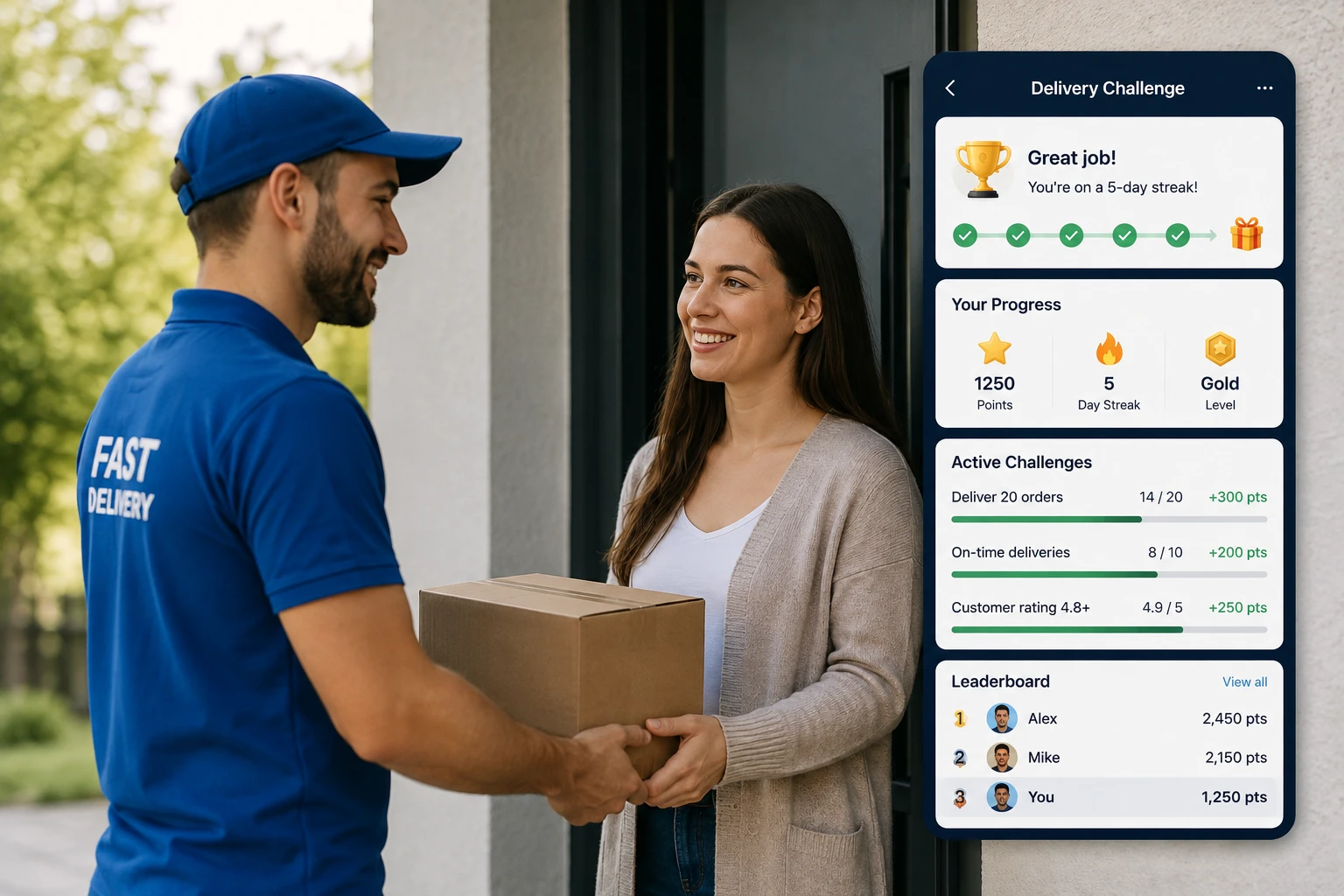

Gamification has moved far beyond video games and mobile apps built purely for fun. Companies now apply game-like elements to everyday work, including logistics and shipping. Delivery services face constant pressure to move packages quickly while keeping staff motivated.
Adding points, badges, or friendly competition into daily tasks gives workers a reason to stay engaged. This article explores what gamification means, why delivery companies adopt it, which tools appear most often, and how courier services use these methods to sharpen performance.
What Is Gamification and How Does It Work
At its core, gamification means applying game mechanics to non-game activities. Think of point systems, achievement badges, or progress bars borrowed from mobile apps and applied to workplace tasks. Employees complete assignments, earn rewards, then track their standing against colleagues or personal goals.
The psychology behind this approach rests on motivation theory. People respond well to instant feedback, visible progress, and a sense of accomplishment. When drivers see their delivery count rise on a screen, that small win encourages continued effort. Combined with rewards like bonuses or recognition, these mechanics tap into natural competitive instincts.
Three common elements appear across most systems:
- Points earned for completed tasks or milestones;
- Badges awarded for specific achievements;
- Leaderboards showing rankings among peers.
Together, these features create a feedback loop that keeps workers invested in daily goals rather than viewing shifts as routine.
Why Delivery Companies Are Turning to Gamification
Logistics firms operate in a demanding environment where speed and accuracy matter constantly. Turnover rates among drivers tend to run high, partly because repetitive tasks feel monotonous over time. Introducing game elements breaks up that monotony while giving staff clearer goals to chase.
Customer expectations have shifted too. Shoppers now expect same day delivery as a standard option rather than a luxury add-on. Meeting that demand requires motivated teams working efficiently under pressure. Gamified systems help by rewarding punctuality and route optimization, pushing drivers toward faster, more reliable service.
Cost savings also play a role. Motivated employees tend to make fewer errors, reducing wasted fuel and misdelivered packages. Lower mistake rates translate directly into better margins for companies operating on thin profit lines. Beyond financial benefits, happier staff often lead to improved customer satisfaction scores, creating a positive cycle across the business.
Common Gamification Tools Used in Logistics
Several platforms and features have become standard across the shipping industry. Route-tracking apps often include built-in scoring systems, letting drivers compare their efficiency against past performance or coworkers. Some companies build custom dashboards showing real-time rankings updated throughout each shift.
Popular tools found in modern logistics operations include:
- Mobile apps with achievement badges for milestones like zero-error weeks.
- Real-time leaderboards displayed in break rooms or driver apps.
- Bonus point systems tied to fuel efficiency or on-time rates.
- Team-based challenges encourage collaboration over pure competition.
- Progress bars showing monthly targets and remaining goals.
These tools vary widely depending on company size and budget, but the underlying goal stays consistent: turning routine metrics into engaging, visible progress markers that drivers actually want to check.
Gamification Strategies Used by Courier Services
Many courier services have embraced these techniques as competition within the industry intensifies. Fast delivery promises attract customers, so firms need reliable methods for keeping drivers sharp and focused throughout long shifts. Some businesses tie rewards directly to speed metrics, offering small bonuses for consistently beating average delivery windows.
Others focus on safety alongside speed, avoiding a system that pushes drivers to rush recklessly. Balanced programs reward careful driving habits equally alongside quick turnaround times, preventing accidents caused purely by chasing points. Team challenges between depots or regions add another layer, fostering healthy rivalry without pitting individual coworkers against each other unfairly.
Customer-facing gamification exists too. Some apps let shoppers track their delivery in real time, almost like watching a mini-game unfold as their package moves closer. This transparency builds trust while keeping expectations realistic during busy periods.
Gamification offers a practical way for delivery businesses to boost morale, sharpen performance, and meet rising customer expectations around speed and reliability. From simple point systems to complex leaderboards, these tools transform routine tasks into engaging challenges that benefit both staff and customers.
Companies looking for a delivery partner that blends efficiency with genuine care for service quality should consider Lucky Van. Their approach to logistics reflects exactly the kind of motivated, performance-driven service that modern gamification strategies aim to create. Reach out today and see how their team can support your delivery needs.
