

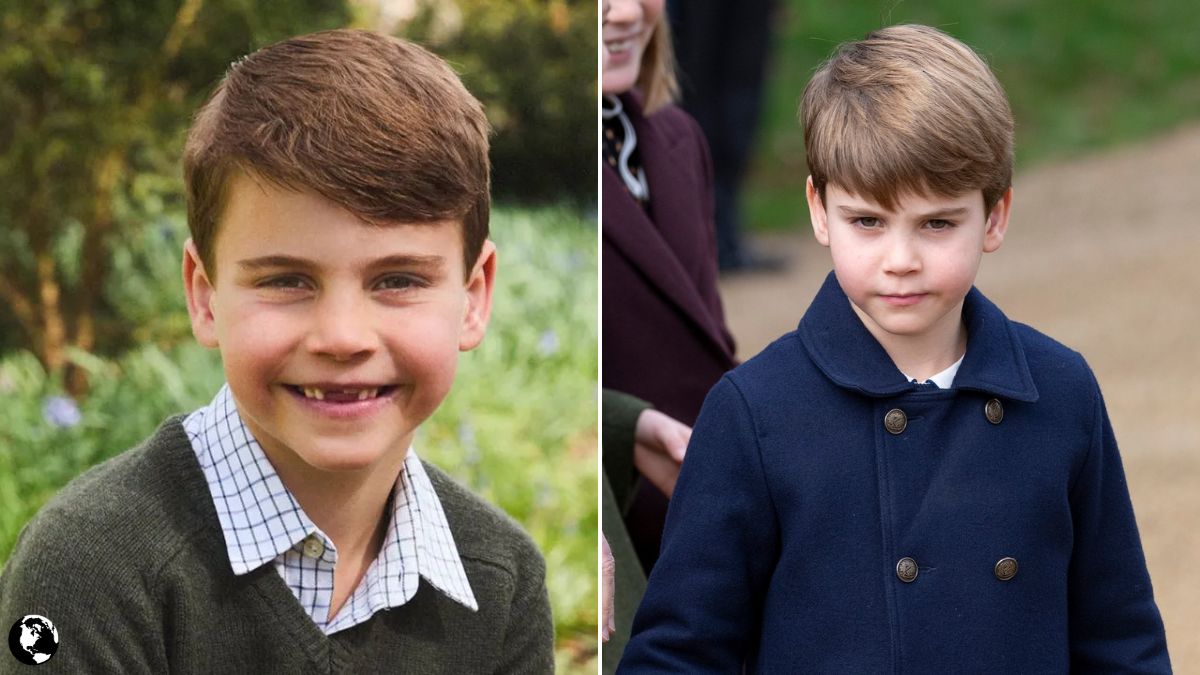

Prince Louis occupies a unique position within the British royal family. As the youngest child of the Prince and Princess of Wales, he represents both continuity and change—rooted in royal tradition while growing up in a visibly modern household. Though still young, Prince has already become a familiar presence at national celebrations and public events, offering a glimpse into how the monarchy presents itself to future generations.
This profile explores Prince Louis in depth, examining his background, family life, public role, and the cultural significance he carries as a young royal growing up under global attention.
Early Life and Family Background
Prince Louis was born on April 23, 2018, at St Mary’s Hospital in London. His full name, Louis Arthur Charles, reflects long-standing royal naming traditions while also honoring close family connections. He is the third child of Prince William and Catherine, Princess of Wales, and the younger brother of Prince George and Princess Charlotte.
At birth, he was known as Prince Louis of Cambridge, a title linked to his father’s role as Duke of Cambridge at the time. His early life unfolded during a period when the royal family was increasingly focused on balancing public duty with private family life.
From the outset, Prince was raised with an emphasis on stability. His parents made deliberate choices to shield him from unnecessary exposure while still acknowledging his place within the royal institution. This approach has shaped how he appears in public—comfortable, composed, yet unmistakably a child.
Prince Louis of Wales and the Line of Succession
Following the accession of King Charles III, Prince William became Prince of Wales, and his children’s titles were updated accordingly. Today, Prince is formally known as Prince Louis of Wales and stands fourth in line to the British throne.
While the likelihood of him becoming monarch remains distant, his position in the line of succession carries symbolic weight. Each generation of royals represents continuity, and Prince Louis embodies the future stability of the monarchy. His role reinforces the structured order that underpins Britain’s constitutional system.
Understanding Prince Louis of Wales also means recognizing the evolving nature of royal identity. Titles change with circumstance, but responsibility, visibility, and public interest remain constant.
Life Inside a Modern Royal Household
Prince Louis is being raised in a household that reflects a shift in royal parenting philosophy. Prince William and Kate Middleton have emphasized emotional awareness, discipline balanced with warmth, and exposure to everyday experiences.
Unlike earlier generations, royal children today are seen attending school, engaging in age-appropriate activities, and interacting naturally during public appearances. This environment allows Prince Louis to develop confidence without detachment from reality.
The relationship between Kate Middleton and her youngest son has drawn particular attention. Moments featuring Kate Middleton Prince Louis royal balcony appearances often show her guiding him quietly through formal occasions, reinforcing the image of attentive, hands-on parenting within a royal context.
Public Appearances and National Events
Prince has appeared at several major public events despite his young age. National celebrations, commemorations, and royal gatherings have introduced him to the public gradually rather than through constant exposure.
Balcony appearances during Trooping the Colour have become especially memorable. These moments reveal a child learning royal protocol in real time—observing, reacting, and adjusting under gentle guidance. The repeated visibility of Prince Louis during such occasions contributes to a broader understanding of how royal children are introduced to public life.
At sporting events, including Wimbledon, Prince has also been seen engaging with the environment in a relaxed manner. The moment involving a Prince Louis Wimbledon gift reflected the royal family’s tradition of courtesy while allowing space for childlike curiosity.
Personality and Public Perception
Prince Louis is often described as expressive, observant, and spirited. His reactions during public appearances suggest a child comfortable expressing himself within boundaries. This balance has resonated with audiences, offering a reminder that royal upbringing does not require emotional restraint at the cost of authenticity.
Rather than diminishing the dignity of royal occasions, his presence often adds warmth. Prince Louis demonstrates that tradition can coexist with individuality, a quality that reflects the monarchy’s broader evolution.
As he matures, these early impressions may shape how he approaches public life. Personality plays a significant role in royal perception, and Prince Louis’s natural ease suggests he may navigate future responsibilities with confidence.
Education and Early Development
Education forms a central pillar of Prince Louis’s upbringing. Alongside his siblings, he attends school under a curriculum designed to encourage academic growth, creativity, and social awareness.
His schooling reflects his parents’ belief in shared experiences. Learning alongside peers helps reinforce empathy and cooperation—skills essential for anyone raised within a public institution.
While specific details about his interests remain private, occasional glimpses suggest enjoyment of outdoor activity, play, and family interaction. These experiences contribute to well-rounded development and support emotional resilience.
Prince Louis of Cambridge: A Title That Marked a Chapter
The title Prince Louis of Cambridge represents an important period in his early life. It connects him to a time when his parents focused on establishing a stable family identity while fulfilling royal duties.
Though his title has since changed, this designation remains historically relevant. It reflects how royal titles evolve while personal identity continues uninterrupted. For Prince Louis, these changes will become part of his understanding of royal tradition as he grows older.
Cultural Significance of Prince Louis
Prince Louis matters not because of immediate authority, but because of representation. He reflects how the monarchy introduces continuity without rigidity. His upbringing illustrates how royal institutions adapt to societal expectations while preserving ceremonial roles.
Public response to Prince Louis suggests that relatability strengthens trust. By allowing moments of natural behavior, the royal family reinforces its connection with the public.
As Prince of Wales grows, his presence will continue to influence how future generations perceive the monarchy—not as distant symbolism, but as a living institution shaped by people.
Conclusion
Prince Louis stands at the intersection of tradition and modernity. From his early identity as Prince Louis of Cambridge to his current role as Prince of Wales, his journey reflects the careful balance his family maintains between duty and childhood.
Though his future role remains undefined, Prince already contributes to the monarchy’s evolving image. Through calm exposure, thoughtful parenting, and visible authenticity, he represents a future rooted in continuity yet open to change.
